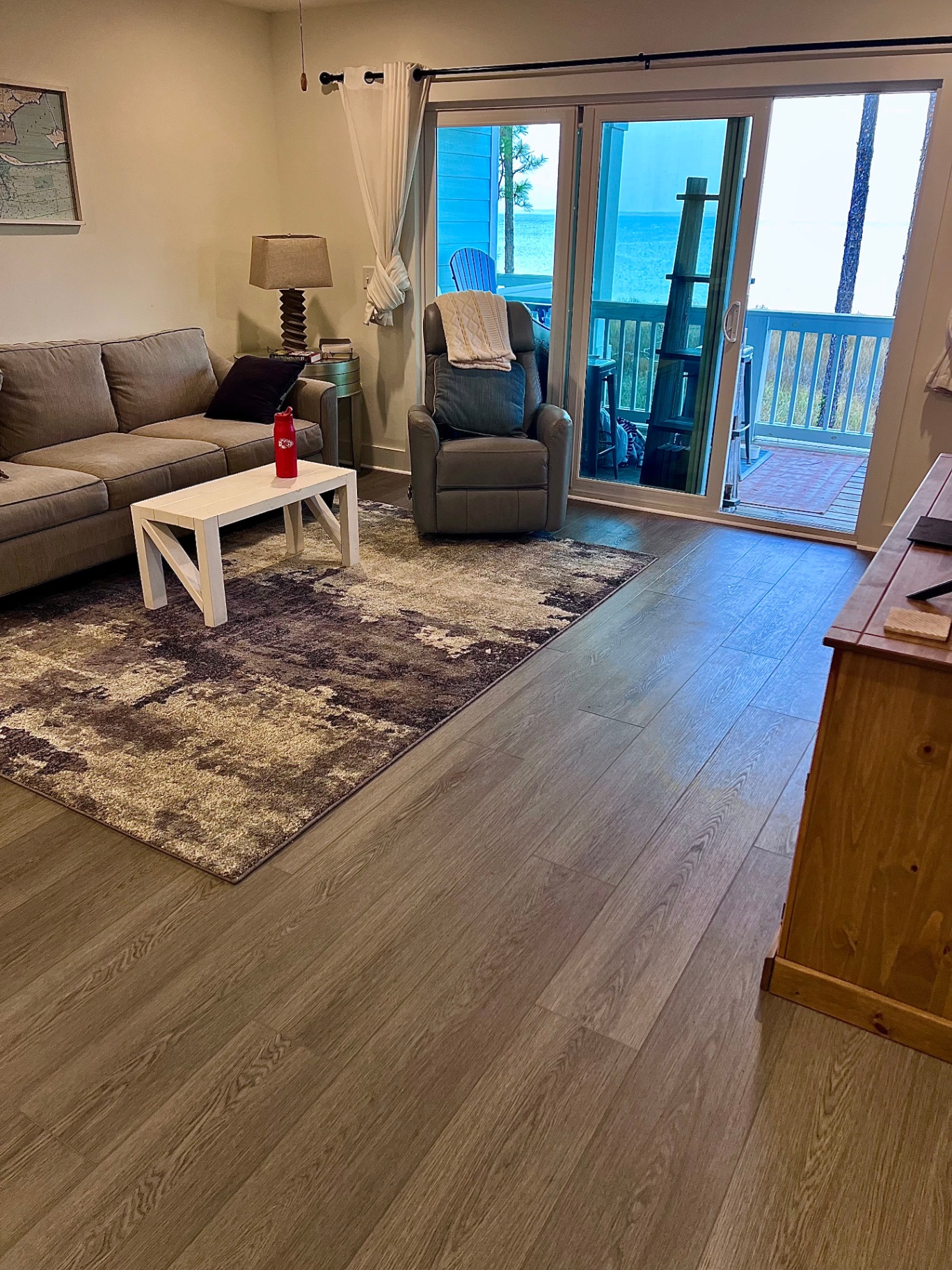
The bathroom is the hardest-working room in your house when it comes to flooring. Daily showers create steam and humidity, water splashes around the sink, the toilet area gets splashed constantly, and bath mats trap moisture against the floor for hours. On top of that, Pensacola's Gulf Coast humidity means the air in your bathroom is already moisture-heavy before the shower even turns on. Put the wrong flooring in a bathroom and you'll be dealing with mold, warping, or discoloration within a year or two. Here's what actualy holds up.
What Bathroom Flooring Has to Handle
Bathroom flooring in a Gulf Coast home faces challenges that other rooms don't come close to matching.
Constant moisture exposure. Not just splashes — bathrooms generate humidity from hot showers that condenses on every surface, including the floor. Bath mats sit wet on the floor for hours. Water pools around the base of the toilet and vanity. In a Pensacola bathroom with no window ventilation, moisture levels can stay elevated all day.
Cleaning chemicals. Bathroom floors get cleaned with bleach, ammonia, and harsh disinfectants regularly. Your flooring needs to resist chemical exposure without discoloring or degrading.
Mold and mildew risk. Warm + wet + dark (under cabinets, behind the toilet) = mold paradise. Any flooring that traps moisture or allows it to penetrate to the subfloor creates conditions for mold growth. This is a health issue, not just a cosmetic one.
Slip resistance when wet. Bathroom floors are wet frequently. Smooth, glossy flooring becomes dangerously slippery when wet. Textured surfaces and slip-rated materials are a safety requiremnt, not a luxury.
Gulf Coast humidity amplifier. Pensacola's 70-90% outdoor humidity means your bathroom starts at a moisture disadvantage before anyone turns on the shower. Materials that handle 'moderate' moisture in dry climates can fail in Gulf Coast bathrooms where the ambient moisture level is already high.
The Best Bathroom Flooring Options for Pensacola
Porcelain Tile — The Gold Standard for Bathrooms
Porcelain tile absorbs less than 0.5% moisture — it is the definitive bathroom flooring material. It handles daily water exposure, steam, cleaning chemicals, and Gulf Coast humidity without any degradation. For shower floors and walls, porcelain with proper waterproofing membrane is the only professional-grade solution. Textured porcelain provides excellent slip resistance when wet. Wood-look, marble-look, and stone-look porcelain designs mean you don't have to sacrifice aesthetics for function. Cost: $6-12/sq ft installed for floors. Add $8-15/sq ft for shower walls with waterproofing.
Luxury Vinyl Plank (LVP) — The Comfortable Alternative
LVP is 100% waterproof and significantly warmer and softer underfoot than tile — a real comfort advantage when stepping out of the shower on bare feet. SPC rigid core LVP handles bathroom moisture without expanding, warping, or growing mold. It installs faster and costs less than tile. The limitation: LVP should NOT be used in showers or tub surrounds where it's constantly submerged. For bathroom floors, vanity areas, and powder rooms, LVP is an excellent choice. Cost: $4-8/sq ft installed.
Ceramic Tile — Budget Bathroom Option
Ceramic tile costs less than porcelain ($5-8/sq ft installed) and works for bathroom floors and walls. It's more porous than porcelain (3-7% water absorption) so it requires sealing in wet areas. For powder rooms and half-baths where moisture exposure is moderate, ceramic provides good value. For full bathrooms with showers, we recomend porcelain over ceramic for its superior moisture resistance.
What NOT to Put in a Pensacola Bathroom
Carpet — absorbs water, breeds mold, impossible to keep sanitary. Laminate — HDF core swells from moisture, edges curl, floor buckles. Solid hardwood — cups and warps from bathroom humidity even with good ventilation. We've replaced all three from Pensacola bathrooms — save yourself the trouble and start with waterproof.
Bathroom Floor vs Shower Floor — Different Requirements
This is a critical distinction that many homeowners miss: bathroom floor flooring and shower flooring have completely different requirements.
Bathroom floor — the area around the toilet, vanity, and bathtub. This surface gets splashed and mopped but isn't continuously submerged. Both LVP and porcelain tile work excellently here. LVP is warmer on bare feet; tile is more durable long-term.
Shower floor — a surface that's submerged in running water daily. Only tile works here — porcelain or natural stone set over a properly waterproofed shower pan. The shower floor must slope toward the drain (typically 1/4 inch per linear foot), which requires small-format tile (2x2 or smaller mosaic) that can follow the slope. Large tiles can't conform to the pitch.
Shower walls — constantly exposed to direct water spray and steam. Porcelain tile with waterproofing membrane (Kerdi, RedGard, or equivalent) behind it is the professional standard. LVP wall panels exist but are not our recommendation for long-term performance in Gulf Coast humidity.
The waterproofing system matters more than the tile. Beautiful tile over inadequate waterproofing is a ticking time bomb. We install complete waterproofing systems — backer board, membrane, sealed corners and joints, flood-tested shower pans — before a single tile goes up. It's the invisable work that prevents the catastrophic failures we see in bathrooms done by cut-rate installers.
Bathroom Flooring Costs in Pensacola
Average Pensacola bathroom sizes and what each flooring option costs:
Powder room / half bath floor (25-40 sq ft)
LVP: $150-320 installed. Porcelain tile: $200-480. These small rooms are the most affordable flooring projects — even premium materials cost relatively little at this square footage.
Full bathroom floor (50-80 sq ft)
LVP: $250-640 installed. Porcelain tile: $400-960. Most homeowners choose porcelain for full bathrooms since the cost difference is modest and tile's waterproof performance is superior for daily shower use.
Master bathroom floor (80-120 sq ft)
LVP: $400-960 installed. Porcelain tile: $600-1,440. Larger master baths benefit from the seamless look of large-format porcelain tile (12x24 or 24x24) with minimal grout lines.
Shower tile (walls + floor, 60-100 sq ft)
Porcelain with waterproofing: $800-1,500 for a standard shower. Walk-in showers, custom niches, benches, and accent tile increase costs to $1,500-3,000+. This includes backer board, waterproofing membrane, tile, grout, and sealing.
Complete bathroom renovation (floor + shower + backsplash)
All-porcelain: $2,000-5,000+ depending on bathroom size and shower complexity. This is typically part of a larger bathroom remodel budget.
See our complete pricing guide for all flooring types.
Bathroom Flooring Design Tips for Gulf Coast Homes
Match the floor tile to the shower tile — or intentionally contrast. Using the same tile on the bathroom floor and shower walls creates a cohesive, spa-like feel that makes small bathrooms appear larger. Alternatively, a contrasting accent tile in the shower niche or floor creates a focal point. Both approaches work — what doesn't work is randomly mixing unrelated tiles.
Light colors make small bathrooms feel bigger. White, light gray, and cream tile reflects light and opens up tight bathroom spaces. Dark tile is dramatic but can make small powder rooms feel like closets. Save dark tile for larger master bathrooms where the drama has room to breathe.
Large-format tile = fewer grout lines = easier cleaning. 12x24 or larger porcelain tiles on bathroom floors mean less grout to clean and maintain. Rectified tile allows narrower grout joints (1/16 inch) for an almost seamless look. Just remember: shower floors still need small mosaic tile to follow the drain slope.
Heated floors are worth considering. Radiant floor heating under bathroom tile costs $8-15/sq ft to install but transforms the barefoot experience — especially during Pensacola's mild winters. The heating system goes under the tile on top of the subfloor and adds zero floor height. It's a luxury upgrade that's surprizingly affordable in a 50-80 sq ft bathroom ($400-1,200).
Non-slip ratings matter. Look for tile with a DCOF (Dynamic Coefficient of Friction) rating of 0.42 or higher for wet bathroom floors. Matte and textured finishes provide better grip than polished or glossy tile. For shower floors, small mosaic tiles with more grout lines naturally provide better traction.
How to Choose Bathroom Flooring — Our Honest Recommendation
After installing bathroom flooring in hundreds of Pensacola homes, here's our straightforward advice:
Full bathrooms with showers: Porcelain tile throughout — floor and shower. One material, one waterproof system, one cohesive look. This is what we install in the majority of Pensacola bathroom renovations. The upfront cost is higher than LVP but the 50+ year lifespan and zero moisture concerns make it the best long-term value.
Powder rooms and half baths: Either LVP or porcelain — both work perfectly since there's no shower to worry about. LVP is warmer on feet and installs in a few hours. Porcelain is more durable and matches if you have tile in adjacent bathrooms.
Budget-conscious full bathroom: LVP on the bathroom floor, porcelain tile only in the shower stall. This hybrid approach puts the waterproof champion (tile) where it's needed most (the shower) and uses the more affordable option (LVP) for the general floor area.
Master bathroom luxury: Large-format porcelain throughout with heated flooring, matching shower tile with accent niche, frameless glass enclosure. The premium Pensacola master bath renovation.
Whatever you choose, make sure the installation includes proper waterproofing. The most expensive tile in the world will fail if moisture gets behind it. Day Flooring brings bathroom flooring samples to your home — see tile and LVP options against your vanity, wall color, and fixtures. Call (850) 903-3703 for your free consultation.
Frequently Asked Questions
Porcelain tile is the best bathroom flooring for Florida homes — absorbs less than 0.5% moisture, handles daily shower humidity, lasts 50-100+ years, and comes in stunning designs. LVP is the runner-up — 100% waterproof, warmer underfoot, and works well for bathroom floors (but not in showers). Both handle Gulf Coast humidity without issues.
Yes — LVP works excellent on bathroom floors around the toilet, vanity, and bathtub. It's 100% waterproof, warm on bare feet, and easy to clean. However, LVP should NOT be used in showers or tub surrounds where it's constantly submerged in running water. For those areas, porcelain tile with proper waterproofing is the only professional-grade option.
Bathroom floor only: LVP $250-960 installed, porcelain tile $400-1,440 (varies by bathroom size, 50-120 sq ft typical). Shower tile with waterproofing: $800-1,500 for a standard shower. Complete bathroom floor + shower: $2,000-5,000+. Free estimates available — call (850) 903-3703.
Porcelain is better for bathrooms — it absorbs less than 0.5% moisture versus ceramic's 3-7%. Porcelain is denser, harder, and more resistant to cracking. For shower floors and walls, porcelain is strongly preferred. Ceramic works for bathroom floors and half baths where moisture exposure is moderate. The porcelain premium ($1-3/sq ft more) is worth it for full bathrooms.
In showers and tub surrounds — absolutely yes. Waterproofing membrane (Kerdi, RedGard, or equivalent) behind shower tile is non-negotiable. Without it, moisture penetrates behind the tile causing mold, wood rot, and structural damage. For bathroom floors outside the shower, waterproofing is recommended but less critical if the tile and grout are properly sealed. Day Flooring includes professional waterproofing on every shower tile installation.