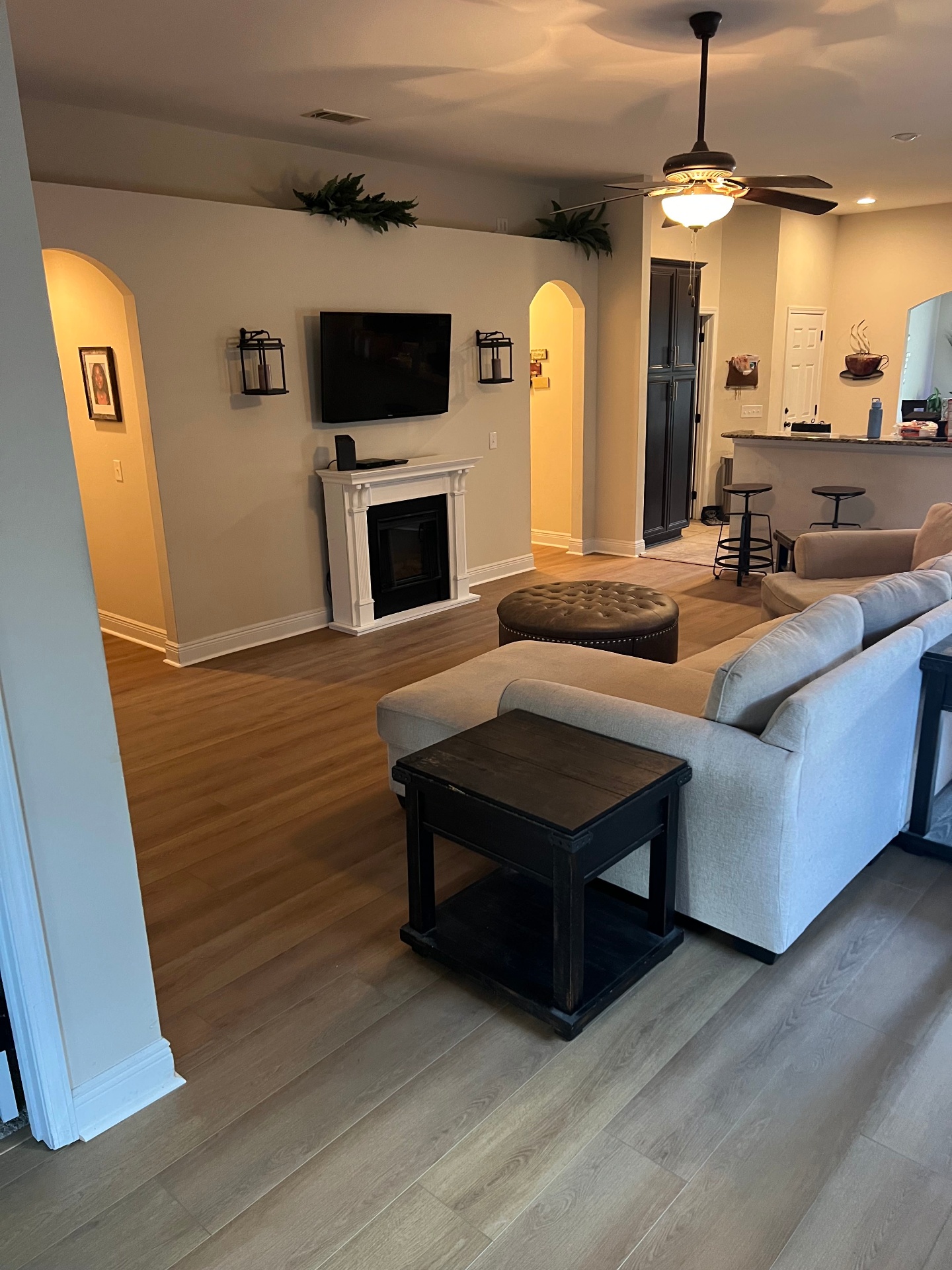

What Makes Flooring Eco-Friendly?
Eco-friendly flooring encompasses multiple environmental considerations throughout a product's lifecycle. Understanding these factors helps you evaluate options and make informed decisions aligned with your sustainability priorities.
Key Sustainability Factors
- Renewable Resources: Materials from rapidly renewable sources (bamboo, cork) or responsibly managed forests (FSC-certified wood) reduce strain on ecosystems
- Recycled Content: Products incorporating post-consumer or post-industrial waste divert materials from landfills
- Low VOC Emissions: Materials that don't off-gas harmful volatile organic compounds protect indoor air quality
- Manufacturing Impact: Energy-efficient production processes and responsible waste management reduce environmental footprint
- Durability and Longevity: Longer-lasting floors mean fewer replacements and less waste over time
- End-of-Life Options: Biodegradable or recyclable materials minimize landfill contribution when eventually replaced
Environmental Certifications to Look For
Third-party certifications verify environmental claims:
- FSC (Forest Stewardship Council): Ensures wood comes from responsibly managed forests
- FloorScore: Certifies low VOC emissions for better indoor air quality
- GREENGUARD: Tests for chemical emissions, with GREENGUARD Gold meeting stricter standards
- Cradle to Cradle: Evaluates materials for safe, circular design
- SCS Global Services: Verifies recycled content and sustainable sourcing claims
Bamboo Flooring: Rapidly Renewable
Bamboo represents one of the most sustainable flooring options available, combining rapid renewability with impressive durability. Despite its grass classification, quality bamboo flooring rivals hardwood in performance and appearance.
Why Bamboo is Sustainable
Bamboo grows remarkably fast—reaching maturity in just 3-5 years compared to 25-60 years for traditional hardwoods. This rapid growth cycle makes bamboo truly renewable. Additionally, bamboo regenerates from its root system after harvesting, eliminating the need for replanting. Bamboo plantations also absorb more carbon dioxide and release more oxygen than equivalent timber forests.
Types of Bamboo Flooring
- Horizontal Bamboo: Strips laid flat showing bamboo's characteristic node pattern. Softer option at about 1,380 Janka hardness.
- Vertical Bamboo: Strips stacked on edge for a more linear grain pattern. Similar hardness to horizontal.
- Strand-Woven Bamboo: Shredded bamboo fibers compressed with resin. Extremely hard (2,000-3,000 Janka) and durable.
Sustainability Considerations
Not all bamboo flooring is equally green. Look for:
- Low-VOC adhesives and finishes
- Certifications verifying sustainable harvesting practices
- Shorter transportation distances when possible
- Manufacturers transparent about their supply chain
Quality bamboo flooring costs $3-8 per square foot and lasts 20-25 years with proper care.
Cork Flooring: Harvested Without Harm
Cork flooring offers a unique combination of sustainability, comfort, and functionality. Harvested from the bark of cork oak trees without harming the tree, cork is inherently renewable and provides excellent performance characteristics.
The Cork Harvesting Process
Cork oak trees (Quercus suber) are not cut down to harvest cork. Instead, the bark is carefully stripped every 9-12 years starting when trees reach 25 years old. Trees live 150-200 years, providing bark harvests throughout their lifespan. After each harvest, the bark regrows, and subsequent harvests actually improve bark quality. This sustainable harvesting maintains healthy cork oak forests that support biodiversity.
Benefits of Cork Flooring
- Naturally Cushioned: Cork's cellular structure contains millions of air-filled cells, providing comfort underfoot and reducing leg fatigue
- Thermal Insulation: Cork provides natural insulation, keeping floors warm and reducing energy costs
- Sound Absorption: Excellent acoustic properties reduce noise transmission between floors
- Antimicrobial: Natural antimicrobial properties resist mold, mildew, and bacteria
- Hypoallergenic: Cork doesn't trap dust or allergens like carpet
Cork Durability and Care
Modern cork flooring features protective polyurethane finishes that enhance durability. Cork naturally bounces back from compression, though heavy furniture may require pads. Expect 15-25 years of life with proper maintenance. Cork is sensitive to moisture and UV light, making it best suited for interior rooms away from direct sunlight. Pricing ranges from $3-10 per square foot depending on quality and style.
Reclaimed Wood: Character with History
Reclaimed wood flooring repurposes timber from old buildings, factories, barns, and other structures, giving new life to materials that would otherwise become waste. This option offers unmatched character while providing significant environmental benefits.
Sources of Reclaimed Wood
- Barn Wood: Weathered planks from dismantled agricultural buildings, often featuring hand-hewn marks and nail holes
- Factory Flooring: Dense, heavy-use flooring from industrial buildings, often showing decades of patina
- Wine Barrels: Oak staves with distinctive coloring from wine absorption
- Shipping Materials: Tropical hardwoods from pallets and crating
- Sunken Logs: Timber recovered from river bottoms, offering unique character
Environmental Benefits
Reclaimed wood flooring prevents usable timber from reaching landfills while avoiding the environmental impact of harvesting new trees. Old-growth reclaimed wood often comes from trees that no longer exist in forests, preserving irreplaceable wood species and grain patterns. By extending material lifespan, reclaimed wood embodies circular economy principles.
Considerations and Costs
Reclaimed wood requires careful processing to remove nails, treat for pests, and ensure structural integrity. Quality varies significantly between sources. Professional installation is recommended given the unique characteristics of each piece. Expect costs of $8-20 per square foot—higher than new hardwood but including history and character that cannot be replicated. Each reclaimed floor tells a story, making your space truly unique.
FSC-Certified Hardwood: Responsible Forestry
For those who want traditional hardwood flooring with environmental responsibility, FSC (Forest Stewardship Council) certification ensures wood comes from forests managed with strict environmental, social, and economic standards.
What FSC Certification Means
FSC certification verifies that forests are managed in ways that preserve biological diversity, benefit local communities, and sustain economic viability. The certification tracks wood from forest through manufacturing to ensure chain of custody. FSC standards prohibit conversion of natural forests, protect old-growth areas, and require reforestation after harvesting.
FSC Certification Levels
- FSC 100%: All wood comes from FSC-certified forests
- FSC Mix: Combines FSC-certified wood with controlled wood from responsible sources
- FSC Recycled: Made entirely from reclaimed or recycled wood fiber
Choosing FSC Hardwood
When selecting FSC-certified hardwood flooring:
- Look for the FSC trademark on products and documentation
- Verify chain of custody certification with suppliers
- Consider domestically sourced species to reduce transportation impact
- Combine with low-VOC finishes for maximum environmental benefit
FSC-certified hardwood typically costs 10-15% more than non-certified options but provides assurance of responsible sourcing. Popular certified species include oak, maple, cherry, and walnut from North American sources.
Natural Linoleum: Biodegradable and Low-VOC
Often confused with vinyl, natural linoleum is an entirely different product made from renewable, biodegradable materials. This historic flooring material (invented in 1860) has experienced renewed interest as sustainability becomes prioritized.
Natural Linoleum Composition
Authentic linoleum contains only natural ingredients:
- Linseed Oil: Pressed from flax seeds, provides durability and flexibility
- Wood Flour: Finely ground wood adds strength and stability
- Cork Powder: Provides resilience and cushioning
- Rosin: Natural tree resin acts as binding agent
- Limestone: Adds hardness and durability
- Jute Backing: Natural fiber provides dimensional stability
These natural components mean linoleum is biodegradable at end of life and produces minimal VOC emissions during use.
Performance Characteristics
Natural linoleum offers impressive durability—lasting 25-40 years with proper maintenance. The material is naturally antimicrobial (linseed oil continues oxidizing throughout its life), fire-resistant, and antistatic. Available in sheets, tiles, and click-lock planks, linoleum comes in hundreds of colors and patterns.
Best Applications
Linoleum excels in schools, hospitals, and commercial environments requiring durability and hygiene. For homes, it works well in kitchens, bathrooms, and high-traffic areas. Avoid below-grade installations or areas with moisture concerns. Cost ranges from $3-8 per square foot, comparable to quality vinyl but with superior environmental credentials.
How Flooring Contributes to LEED Credits
Sustainable flooring choices can contribute to multiple LEED credit categories, making proper material selection important for projects pursuing certification.
Applicable LEED Credits
- Materials & Resources (MR): Points for recycled content, FSC-certified wood, regional materials, and construction waste management
- Indoor Environmental Quality (EQ): Low-emitting materials credit for flooring meeting VOC emission standards
- Building Life-Cycle Impact Reduction: Points for durability planning and extended product life
Documentation Requirements
LEED certification requires documentation proving environmental claims. For flooring, gather:
- FloorScore or GREENGUARD certificates
- FSC chain of custody documentation
- Manufacturer declarations of recycled content
- Health Product Declarations (HPDs)
- Environmental Product Declarations (EPDs)
For more on LEED requirements, see our complete guide to LEED certification and low-emitting materials requirements. Contact our team for help selecting flooring that supports your project's sustainability goals.