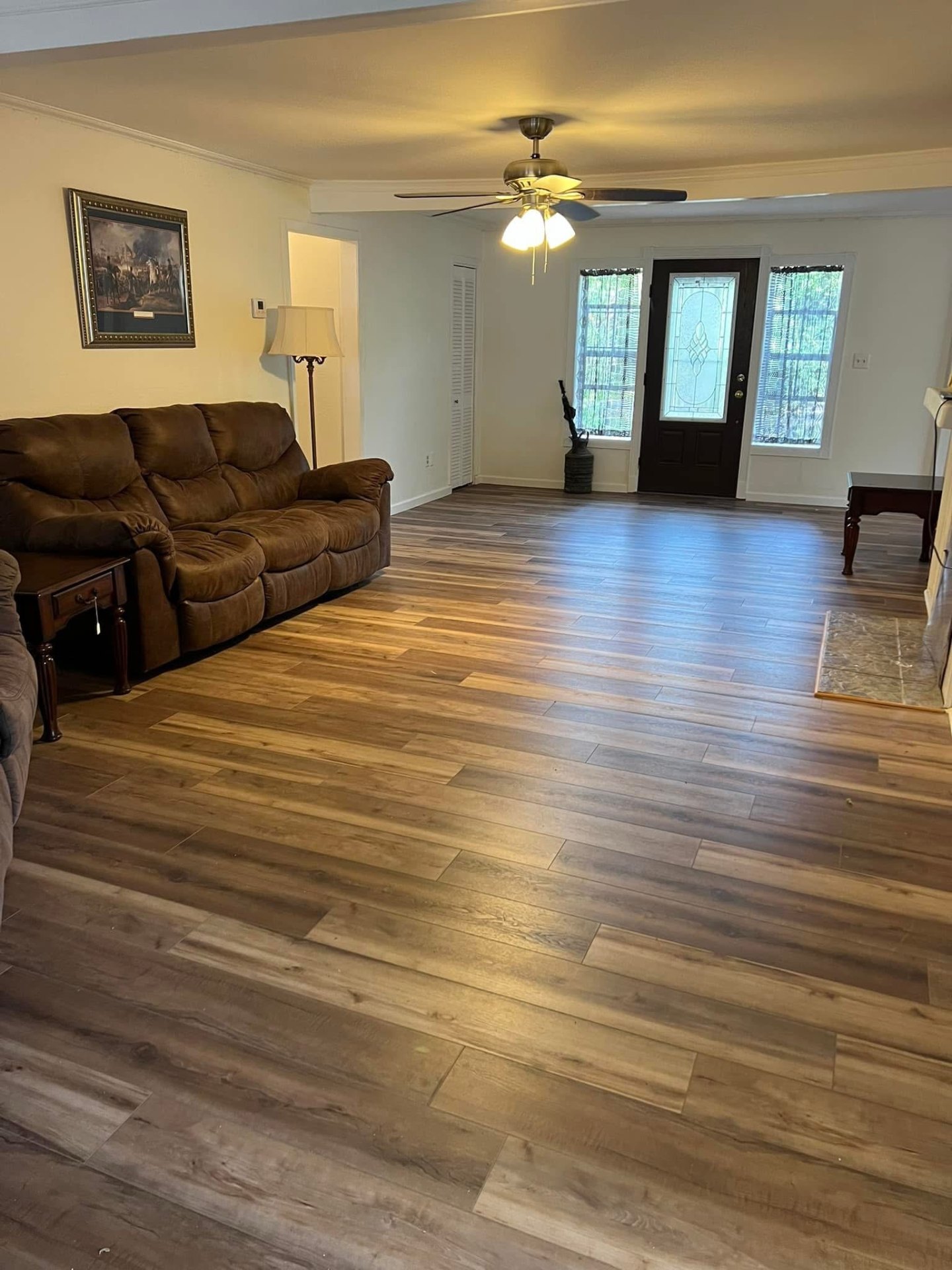

How LVP Is Constructed
Luxury vinyl plank is an engineered flooring product with multiple layers, each designed for specific performance characteristics. Understanding these layers helps you evaluate quality and choose products suited to your needs.
Wear Layer
The top transparent layer protects the decorative image from scratches, scuffs, and wear. Wear layer thickness, measured in mils (thousandths of an inch), directly correlates with durability:
- 6-8 mil: Light residential use; bedrooms, low-traffic areas
- 12 mil: Standard residential; suitable for most home applications
- 20+ mil: Heavy residential and light commercial; maximum durability
Some products feature enhanced wear layers with ceramic bead coating or diamond finish for additional scratch resistance—valuable for homes with dogs or heavy furniture.
Design Layer
High-definition photographs of real wood (or stone) create LVP's realistic appearance. Modern printing technology captures grain details, knots, and color variations that fool casual observers. Quality products use multiple design variations within a single SKU to avoid obvious pattern repetition.
Core Layer
The rigid core provides structural stability and waterproof performance. Two main technologies dominate the market:
- WPC (Wood Plastic Composite): Wood flour or bamboo flour combined with plastic polymers; softer, warmer underfoot
- SPC (Stone Plastic Composite): Limestone powder combined with plastic polymers; denser, more dent-resistant, better temperature stability
Both core types are 100% waterproof—the choice depends on your priorities for comfort versus durability.
Backing Layer
The bottom layer provides cushioning, sound absorption, and moisture barrier protection. Many products include pre-attached underlayment (cork or IXPE foam), simplifying installation and improving acoustic performance.
WPC vs. SPC: Choosing the Right Core
The core layer is the most important differentiator between LVP products. Understanding WPC and SPC characteristics helps match products to your specific application.
WPC (Wood Plastic Composite)
Introduced around 2012, WPC cores combine wood flour or bamboo flour with plastic polymers under heat and pressure.
WPC Advantages
- Comfort: Softer, warmer underfoot than SPC
- Sound absorption: Better acoustic properties; quieter walking
- Subfloor tolerance: Can span minor subfloor imperfections
- Thermal comfort: Less cold feeling in winter
WPC Considerations
- Dent resistance: Softer core can dent under heavy point loads
- Temperature sensitivity: May expand/contract more with temperature changes
- Thickness: Typically thicker (5-8mm) to achieve structural rigidity
- Cost: Generally more expensive than comparable SPC
SPC (Stone Plastic Composite)
Introduced around 2015, SPC cores use limestone powder combined with plastic polymers for a denser, more rigid product.
SPC Advantages
- Dent resistance: Dense core resists denting from furniture and impacts
- Temperature stability: Minimal expansion/contraction; ideal near sunny windows
- Thickness efficiency: Thinner profiles (4-6mm) with equivalent strength
- Cost: Generally less expensive than comparable WPC
- Commercial suitability: Better suited for light commercial applications
SPC Considerations
- Comfort: Harder underfoot; may feel cold
- Sound: Can sound more hollow without quality underlayment
- Subfloor requirements: Requires flatter subfloor; telegraphs imperfections
Which Should You Choose?
For most Florida homes, SPC offers the best balance of performance and value. Its temperature stability suits our climate, and dent resistance handles active family life. Choose WPC if underfoot comfort is paramount—in bedrooms or if you stand frequently in kitchens.
Benefits of Luxury Vinyl Plank
LVP has captured significant market share by offering a compelling combination of benefits that other flooring types can't match.
100% Waterproof
Unlike hardwood or laminate, LVP won't absorb water or suffer damage from moisture. This makes it ideal for:
- Bathrooms and kitchens where spills are common
- Basements and below-grade installations
- Humid Gulf Coast climates
- Homes with pets prone to accidents
- Areas at risk of flooding or water intrusion
Realistic Appearance
Modern LVP looks remarkably like real hardwood. High-definition printing captures grain details, and embossed-in-register (EIR) technology adds surface texture that matches the visual grain. Visitors often can't tell the difference from across a room.
Durability
Quality LVP resists the scratches, dents, and wear that damage natural hardwood. This makes it practical for:
- Households with dogs and cats
- High-traffic areas like entryways and kitchens
- Homes with children
- Rental properties
Easy Installation
Click-lock systems allow LVP to float over existing floors without glue or nails. Many homeowners successfully install LVP as a DIY project. See our LVP installation guide for step-by-step instructions.
Easy Maintenance
LVP requires only regular sweeping and occasional damp mopping. No refinishing, waxing, or special treatments needed. It's one of the lowest-maintenance flooring options available.
Comfort
Softer and warmer underfoot than tile or hardwood, especially with attached underlayment. Some products are compatible with radiant floor heating for additional comfort.
Cost-Effective
LVP typically costs $2-7 per square foot—significantly less than hardwood at $6-15 or tile at $5-15. Installation costs are also lower due to simpler installation requirements.
LVP Limitations to Consider
No flooring is perfect for every situation. Understanding LVP's limitations helps determine whether it's right for your specific application.
Not Natural Material
Despite realistic appearance, LVP is a synthetic product. Some homeowners prefer the authenticity of real wood, with its natural variations and ability to be refinished. LVP cannot be refinished—once the wear layer is worn through, replacement is necessary.
Cannot Be Refinished
Unlike hardwood, which can be sanded and refinished multiple times over decades, LVP is a wear-it-out product. Quality products with thick wear layers last 15-25 years, but eventually require replacement rather than restoration.
Value Perception
While attitudes are changing, some real estate markets still value hardwood more highly than LVP. In luxury home markets, vinyl flooring—regardless of quality—may be perceived less favorably than natural materials.
Environmental Considerations
LVP is a petroleum-based plastic product. While many products carry low-emission certifications and some contain recycled content, it's not a natural or rapidly renewable material like hardwood or bamboo.
Temperature Sensitivity
Some LVP products, particularly WPC, can expand or contract with extreme temperature changes. This is rarely an issue in climate-controlled homes but may affect sunrooms, enclosed porches, or areas near sunny windows. SPC products offer better temperature stability.
Denting Potential
Heavy furniture, especially pieces with small feet or casters, can dent WPC products over time. Use furniture pads and avoid rolling heavy items across LVP floors. SPC products resist denting better.
Not Suitable for Exterior Use
Despite water resistance, LVP is designed for interior use only. UV exposure will fade and degrade the product over time. Outdoor spaces require other flooring solutions.
How to Evaluate LVP Quality
With hundreds of products on the market at various price points, understanding quality indicators helps you make informed decisions.
Wear Layer Thickness
The most important quality indicator for durability. For residential use:
- Minimum: 12 mil for living areas
- Recommended: 20+ mil for high-traffic areas and pet owners
- Premium: Products with ceramic-enhanced or diamond-finish wear layers
Core Density
Denser cores provide better dent resistance and stability. This is where SPC generally outperforms WPC. Ask about core density specifications when comparing products.
Total Thickness
Thicker products (6mm+) feel more substantial and can handle minor subfloor imperfections. However, thickness alone doesn't indicate quality—wear layer thickness matters more for durability.
Attached Underlayment
Products with pre-attached cork or IXPE underlayment simplify installation and improve sound absorption. Without attached underlayment, you'll need to purchase and install separate underlayment.
Realistic Appearance
Examine samples closely:
- Look for distinct designs within a product—more variations means less obvious pattern repetition
- Check for embossed-in-register (EIR) texture that matches the printed grain
- Assess whether colors and grain patterns look natural
Warranty
Quality products carry strong warranties:
- Residential: 25-year to lifetime warranties are common
- Waterproof: Should be explicitly covered, not just water-resistant
- Pet: Some products carry specific pet warranties
Certifications
Look for products with third-party certifications:
- FloorScore: Verifies low VOC emissions
- GREENGUARD: Indoor air quality certification
Browse our carefully selected LVP collection featuring quality products suited to Gulf Coast conditions.
LVP vs. Other Flooring Options
Understanding how LVP compares to alternatives helps determine whether it's the right choice for your situation.
LVP vs. Hardwood
| Factor | LVP | Hardwood |
|---|---|---|
| Cost | $2-7/sq ft | $6-15/sq ft |
| Water Resistance | 100% waterproof | Not water resistant |
| Refinishing | Cannot refinish | Can refinish 3-5 times |
| Authenticity | Realistic look | Real wood |
| Lifespan | 15-25 years | 50+ years with care |
| Maintenance | Minimal | Periodic refinishing |
Choose LVP when: Budget matters, moisture is a concern, or you have pets. Choose hardwood when: Long-term value, authenticity, and refinishing capability matter most.
LVP vs. Laminate
| Factor | LVP | Laminate |
|---|---|---|
| Water Resistance | 100% waterproof | Water resistant (core can swell) |
| Feel | Softer, resilient | Harder, more rigid |
| Sound | Quieter | Can sound hollow |
| Cost | $2-7/sq ft | $1-5/sq ft |
Choose LVP when: Waterproofing matters. Choose laminate when: Budget is primary concern and water exposure is minimal.
LVP vs. Tile
| Factor | LVP | Ceramic/Porcelain |
|---|---|---|
| Comfort | Warmer, softer | Cold, hard |
| Installation | DIY-friendly | Requires skill |
| Durability | Very good | Excellent |
| Water Resistance | 100% waterproof | Waterproof (grout isn't) |
Choose LVP when: Comfort and easy installation matter. Choose tile when: Maximum durability and design flexibility are priorities.
Learn more in our comparison guides: Vinyl vs Carpet and Laminate vs Vinyl.