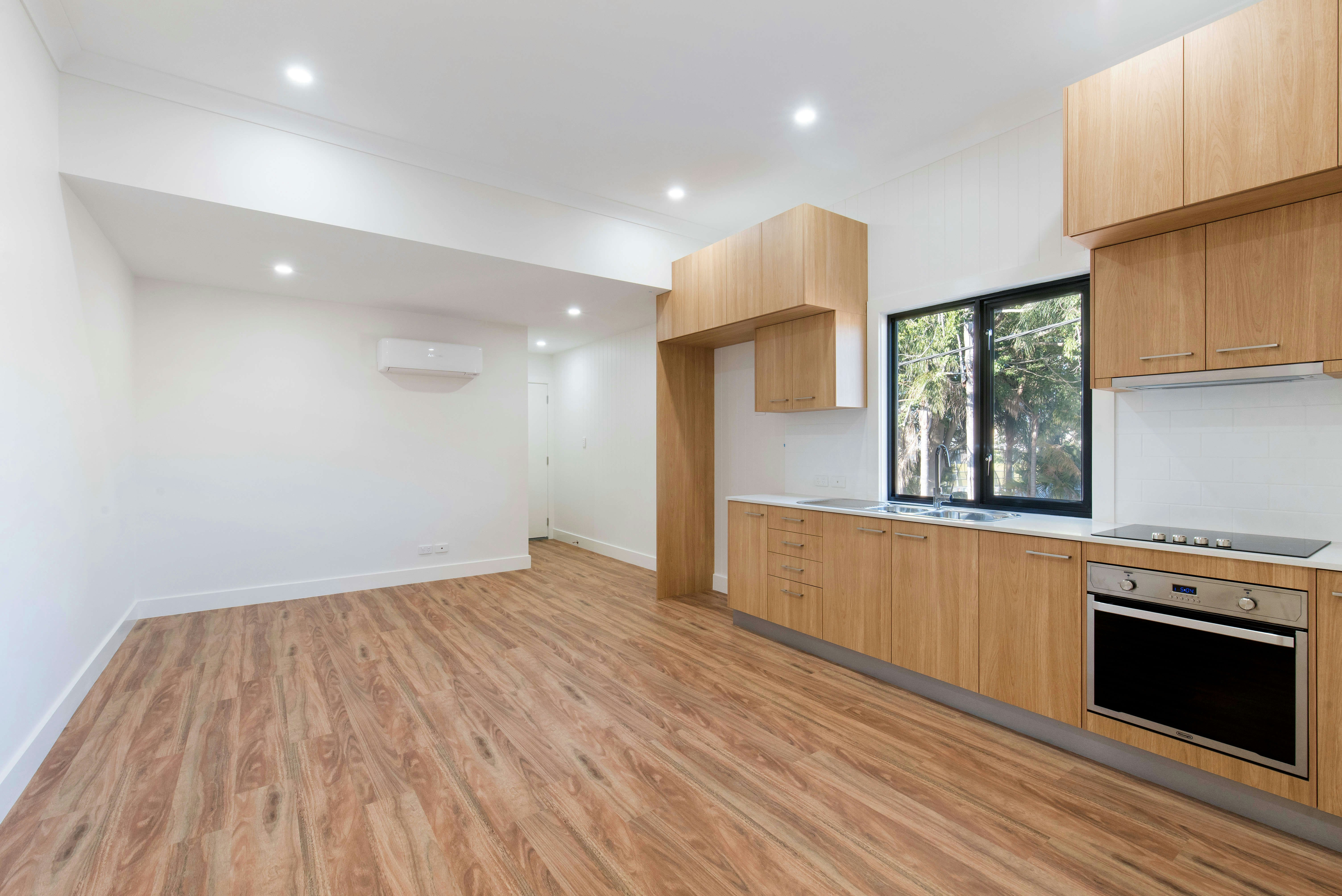
Your kitchen floor takes more punishment than any other surface in your home. Spills, dropped utensils, heavy foot traffic, water splashing from the sink, grease splatters, pet bowls, muddy shoes from the backyard — and in Pensacola, add Gulf Coast humidity on top of all that. The wrong kitchen flooring doesn't just look bad after a few years — it fails. We've ripped out warped laminate, stained carpet (yes, someone put carpet in their kitchen), and cupped hardwood from Pensacola kitchens that chose the wrong material. Here's what actualy works.

What Kitchen Flooring Actually Needs to Handle
Before comparing materials, let's be honest about what a kitchen floor in Pensacola deals with daily.
Water — constantly. Sink splashes, ice cube drops, dishwasher door drips, mopping, pet water bowls, spilled drinks. Your kitchen floor gets wet multiple times every single day. Any flooring that can't handle repeated water exposure will fail in a kitchen. Period.
Impact and dropping. Cast iron pans, glass jars, ceramic plates, cans from the pantry. Kitchen floors get hit with heavy, hard objects regularly. The flooring needs to resist denting and chipping from impact.
Standing for extended periods. If you cook regularly, you stand on your kitchen floor for 30-60 minutes at a time. Comfort underfoot matters more than you'd think — hard tile is brutal on knees and backs during long cooking sessions. This is where softer options like LVP have a real advantage.
Staining agents. Tomato sauce, red wine, turmeric, coffee, grease. Kitchen spills involve some of the most staining substances in your home. Your flooring needs to resist staining or be easy to clean before stains set.
Gulf Coast humidity. Pensacola kitchens often have sliding doors to patios or pools. Humid air flows in constantly. Any moisture-sensitive flooring (solid hardwood, standard laminate) is fighting an uphill battle in a Gulf Coast kitchen.
The Best Kitchen Flooring Options for Pensacola
Luxury Vinyl Plank (LVP) — The #1 Kitchen Choice
LVP is the most popular kitchen flooring in the Pensacola area by a wide margin. It's 100% waterproof, comfortable underfoot for long cooking sessions, and today's wood-look designs are remarkably convincing. SPC rigid core LVP won't dent from dropped cans or indent from heavy appliances. It installs over concrete slabs without moisture concerns and flows seamlessly into open-concept living areas. Most kitchen LVP installations complete in one day. Cost: $4-8/sq ft installed.
Porcelain Tile — The Durability Champion
Porcelain tile is virtually indestructable in a kitchen. It handles water, heat, stains, scratches, and decades of daily abuse without showing wear. Wood-look porcelain planks give you the aesthetic of hardwood with the waterproof performance of tile. The trade-off: porcelain is hard and cold underfoot, making it tiring during long cooking sessions. Anti-fatigue mats help but add clutter. Porcelain also costs more to install and takes longer (2-3 days vs 1 day for LVP). Cost: $6-12/sq ft installed.
Engineered Hardwood — Beautiful but Risky
Engineered hardwood in kitchens looks stunning — warm, natural, and elegant. And in well-controlled indoor environments, it can work. But honestly? We caution most Pensacola homeowners against hardwood in the kitchen. One dishwasher leak, one ice maker overflow, one spill that isn't caught for a few hours — and you're looking at water damage that can't be fixed without replacing boards. If you absolutly must have real wood in your kitchen, engineered hardwood with a robust finish is safer than solid, and you need to commit to wiping up every spill immediately.
Laminate — Budget-Friendly but NOT Waterproof
We need to be straight about this: standard laminate is not appropriate for Gulf Coast kitchens. The HDF core swells and permanently warps from water exposure. 'Water-resistant' laminate with sealed edges handles brief splashes but will fail from a dishwasher leak or prolonged moisture. If budget is tight, entry-level LVP at $4-5/sq ft provides genuine waterproof performance for only $1-2 more per square foot than laminate — a small premium that prevents expensive failure.
Kitchen Flooring for Open-Concept Homes
Open floor plans dominate Pensacola home design — and they create a specific kitchen flooring challenge. When your kitchen flows directly into the living room and dining area, the flooring needs to be continous or transition seamlessly.
One material throughout — The cleanest look. LVP from the kitchen through the living room and into the hallway creates a spacious, unified feel with no transitions to trip over or collect dirt. This is the most popular approach in Pensacola open-concept renovations.
Tile kitchen + LVP living area — If you want tile's superior durability in the kitchen but LVP's warmth in the living room, a clean transition strip where the rooms meet works well. The key is choosing a tile and LVP with similar color tones so the transition feels intentional, not abrupt.
Tile kitchen + hardwood living area — The premium approach. Porcelain tile handles the kitchen's moisture demands while hardwood brings warmth to the living space. This combination adds the most resale value but costs the most to install.
What we see fail: carpet in the kitchen (stains within weeks), solid hardwood in the kitchen (cups from humidity), and laminate meeting tile (laminate swells from kitchen moisture and pushes against the transition strip). Stick with waterproof materials in the kitchen regardless of what's in adjacent rooms.
Kitchen Flooring Costs in Pensacola
Average Pensacola kitchen is 100-200 square feet. Here's what each flooring option costs for a typical kitchen:
LVP kitchen floor (150 sq ft): $600-1,200
Mid-range SPC vinyl plank at $4-8/sq ft total. Includes old flooring removal, subfloor prep, installation, and transition strips. Most LVP kitchen installations complete in one day.
Porcelain tile kitchen floor (150 sq ft): $900-1,800
Mid-range porcelain at $6-12/sq ft total. Includes demo, leveling if needed, tile setting, grouting, and sealing. Takes 2-3 days including cure time.
Engineered hardwood kitchen floor (150 sq ft): $900-1,800
Mid-range engineered at $6-12/sq ft total. Similar cost to tile but without the waterproof benefit. Requires careful moisture management.
Laminate kitchen floor (150 sq ft): $450-900
Budget option at $3-6/sq ft total. Cheapest upfront but NOT waterproof — we honeslty don't recommend it for Gulf Coast kitchens.
For the best value in a Pensacola kitchen, mid-range LVP at $5-7/sq ft delivers waterproof performance, comfortable standing, and convincing hardwood looks at a reasonable price. See our complete pricing guide.
Kitchen Flooring Trends in Pensacola for 2026
Wood-look everything. Whether it's LVP, porcelain, or actual hardwood, the wood-look aesthetic dominates Pensacola kitchens. Gray and greige tones remain popular but warm natural oak is making a strong comeback. Wide planks (7-9 inches) create a more modern, spacious feel than narrow boards.
Large-format tile. 12x24 and 24x24 porcelain tiles with minimal grout lines create a clean, contemporary kitchen look. Fewer grout lines mean less cleaning and a more seamless appearance. Rectified tile allows grout joints as narrow as 1/16 inch.
Herringbone patterns. Both LVP and tile in herringbone layout add visual drama to kitchen floors. The pattern costs 15-20% more in materials and labor but creates a designer look that elevates the entire kitchen.
Matte finishes over glossy. Matte and satin finish flooring hides scratches, fingerprints, and water spots better than high-gloss. It also provides better slip resistance when wet — a genuine safety consideration in kitchens.
Continuous flow from kitchen to outdoor. Gulf Coast homes increasingly extend flooring from the kitchen through sliding doors to covered patios. Outdoor-rated porcelain tile makes this seamless — same material inside and out. For LVP, a coordinating outdoor tile creates visual continutiy without using LVP outdoors (not recommended for direct sun exposure).
How to Choose Kitchen Flooring — Our Honest Advice
After installing kitchen floors in hundreds of Pensacola homes, here's what we tell every homeowner:
If you cook regularly and have kids or pets: LVP. It handles everything a busy kitchen throws at it, it's comfortable to stand on, and it's affordable enough that you don't stress about every dropped glass. This is what 70% of our Pensacola kitchen customers choose.
If durability is your top priority and budget allows: Porcelain tile. It will literally outlast your kitchen cabinets, countertops, and probably the house itself. Add anti-fatigue mats at the sink and stove if you cook often.
If you're selling your home soon: LVP or hardwood add the most appeal to buyers. Gray or natural oak tones photograph well and appeal to the widest range of tastes. Avoid anything too trendy — neutral sells.
If budget is very tight: Budget LVP at $4-5/sq ft, not laminate. The $1-2/sq ft savings of laminate over LVP is not worth the risk of water damage in a Gulf Coast kitchen. A 150 sq ft kitchen at $4.50/sq ft LVP vs $3.50/sq ft laminate is only a $150 difference — and that $150 buys you genuine waterproof protection.
Day Flooring brings kitchen flooring samples to your home — see how each option looks with your cabinets, countertops, and wall colors in your own lighting. Free consultation, honest advice. Call (850) 903-3703.
Frequently Asked Questions
LVP (luxury vinyl plank) is the best overall kitchen flooring for Florida homes — 100% waterproof, comfortable for standing, handles humidity, and costs $4-8/sq ft installed. Porcelain tile is the most durable option (50-100+ years) but harder underfoot. Both handle Gulf Coast kitchens' constant moisture exposure.
We generally caution against hardwood in Gulf Coast kitchens. One dishwasher leak or unnoticed spill can cause water damage requiring board replacement. If you want the wood look, LVP provides it with genuine waterproof protection. If you insist on real wood, engineered hardwood is safer than solid, but requires vigilant spill cleanup.
We don't recommend laminate for Pensacola kitchens. Standard laminate is not waterproof — the HDF core swells permanently from water exposure. Even 'water-resistant' laminate only handles brief splashes. For $1-2 more per square foot, LVP gives you genuine waterproof performance in a kitchen that sees water daily.
For a typical 150 sq ft Pensacola kitchen: LVP $600-1,200, porcelain tile $900-1,800, engineered hardwood $900-1,800, laminate $450-900. LVP offers the best value for waterproof kitchen flooring. All prices include materials, subfloor prep, and professional installation.
LVP and porcelain tile are both extremely easy to clean — sweep and damp mop, that's it. LVP requires no sealing or special cleaners. Porcelain tile is equally easy but grout lines need periodic resealing (every 1-2 years) to prevent staining. Both resist kitchen stains from tomato sauce, wine, grease, and coffee.