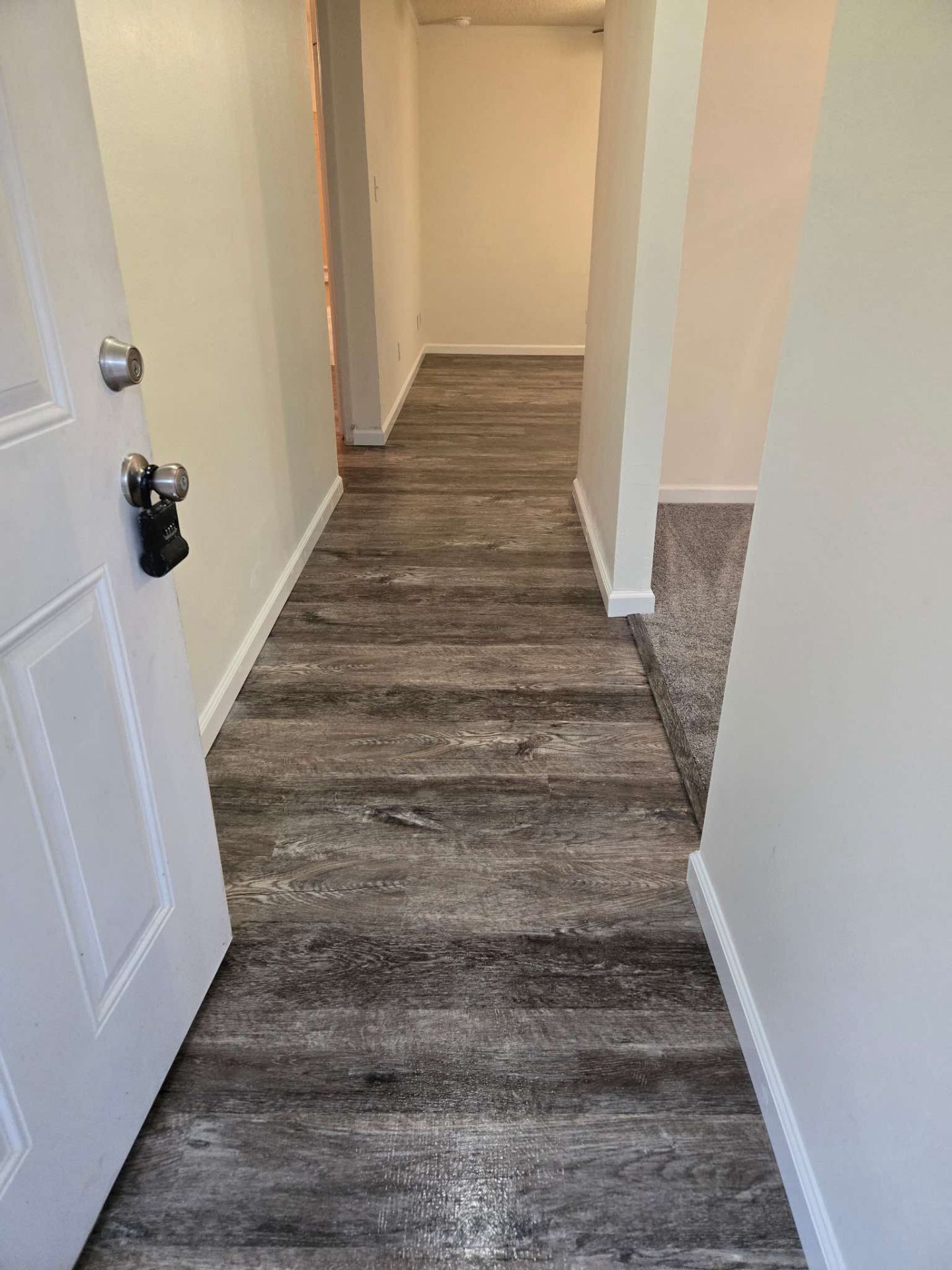
Laminate is one of the most budget-friendly flooring options that still looks genuinely good. Modern laminate has come a long way from the cheap, plasticky stuff people remember from the 90s — today's products use high-definition printing that's genuinly hard to tell apart from real hardwood. But 'affordable' doesn't mean 'free,' and the total cost depends on more than just the price tag on the box. Here's what laminate flooring actually costs in the Pensacola and Gulf Coast area in 2026, broken down into materials, labor, and the extras most people don't think about until the installer shows up.

Laminate Flooring Material Costs Per Square Foot
Laminate material costs in Pensacola range from $1 to $5 per square foot, with most homeowners landing in the $2-3 range for a solid product.
Budget laminate ($1-2/sq ft material) — Entry-level laminate with thinner HDF core (6-7mm total thickness), basic embossed texture, and simple wood-grain printing. It gets the job done for rental properties, spare rooms, and spaces where you need decent-looking floors without a big investment. The thinner core means less impact resistance and a slightly hollow sound underfoot. Most budget laminate has an AC3 durability rating — adequate for bedrooms but marginal for kitchens and living rooms.
Mid-range laminate ($2-4/sq ft material) — This is where laminate gets genuinely impressive. Thickness jumps to 8-12mm, high-definition printing creates realistic wood grain you have to touch to question, and embossed-in-register (EIR) texturing aligns the surface texture with the printed grain. AC4 and AC5 durability ratings handle heavy residential traffic. Brands like Pergo, Mohawk RevWood, and Shaw Repel offer products in this range with enhanced moisture resistance. For most Pensacola homeowners, this tier provides the best balance of looks, durability, and value.
Premium laminate ($4-5/sq ft material) — Top-tier laminate with extra-thick cores (12mm+), waterproof or water-resistant technology, and the most realistic visuals available. Some premium laminates include attached underlayment, reducing installation cost. Products like Pergo Outlast and Mohawk RevWood Plus incorporate water-resistant cores that handle occasional spills without the swelling that destroys standard laminate. For Pensacola homes where you want hardwood looks without hardwood humidity concerns, premium laminate is a smart comprimise.
Laminate Installation Costs in the Pensacola Area
Professional laminate installation labor in Pensacola runs $1.50-3.00 per square foot, depending on room complexity and what's included.
Basic installation ($1.50-2.00/sq ft labor) — Standard rectangular rooms with click-lock floating installation over existing underlayment or an existing smooth subfloor. Includes furniture moving and basic cleanup.
Full-service installation ($2.00-3.00/sq ft labor) — Includes old flooring removal and disposal, subfloor preparation (leveling, cleaning, minor repair), underlayment installation, laminate installation, transition strips between rooms, and quarter-round or baseboard reinstallation. This is what most Pensacola homeowners need and what Day Flooring includes in our standard quotes.
Underlayment ($0.25-0.75/sq ft) — A thin foam or rubber layer between the subfloor and the laminate that provides cushioning, sound dampening, and a minor moisture vapor barrier. Some premium laminates have underlayment pre-attached (saving this cost). For concrete subfloors common in Florida homes, a vapor barrier underlayment is essential — moisture from the slab will destroy laminate from underneath if not blocked.
One thing that catches people off guard: laminate installation is fast. A single bedroom can be done in half a day, and a whole house in 2-3 days. That speed means lower labor costs compared to tile or hardwood — it's one reason laminate is such a good value proposition.
Total Laminate Flooring Cost — Real Pensacola Examples
Here's what complete laminate projects cost in the Pensacola market in 2026, all-in with materials, underlayment, and professional installation:
Single room (150 sq ft) — Budget: $525-750
Basic laminate ($2/sq ft) + underlayment ($0.50/sq ft) + installation ($1.50/sq ft) = approximately $4/sq ft total. A bedroom or home office done in a few hours.
Single room (150 sq ft) — Mid-range: $750-1,125
Mid-range laminate ($3/sq ft) + underlayment ($0.50/sq ft) + full-service installation ($2/sq ft) = approximately $5.50/sq ft total. Includes old flooring removal, subfloor prep, and transition strips.
3 bedrooms + hallway (500 sq ft) — Budget: $1,750-2,500
Budget laminate throughout. Whole-house pricing often reduces the per-square-foot cost since setup and mobilization happens once.
3 bedrooms + hallway (500 sq ft) — Mid-range: $2,500-3,750
Mid-range laminate with full-service installation. The most common laminate project we do across the Gulf Coast.
Whole house (1,000 sq ft) — Premium: $5,000-7,000
Premium water-resistant laminate throughout living areas, bedrooms, and hallways. Note: we don't recommand laminate for bathrooms, kitchens, or laundry rooms — even 'water-resistant' laminate can swell from prolonged moisture exposure. For those rooms, waterproof LVP is the smarter choice.
These prices are specific to the Pensacola and Gulf Coast market — call (850) 903-3703 for your free in-home estimate.
Laminate Cost vs Other Flooring Types
Laminate sits in an interesting spot — it's more expensive than carpet but cheaper than everything else. Here's how it compares in the Pensacola market:
Laminate vs carpet: Laminate $3-6/sq ft installed vs carpet $2-5/sq ft. Carpet is cheaper but laminate lasts longer (15-25 years vs 10-15). Laminate is easier to clean and better for allergy sufferers. Carpet is softer and warmer. Many homeowners use laminate in living areas and carpet in bedrooms.
Laminate vs LVP: Laminate $3-6/sq ft vs LVP $4-8/sq ft. Similar price range, but LVP is 100% waterproof while laminate is NOT waterproof (water destroys the HDF core). For kitchens, bathrooms, and homes with pets that have accidents, LVP is worth the small premium. For dry bedrooms and offices, laminate offers comparable performance at a lower price.
Laminate vs hardwood: Laminate $3-6/sq ft vs hardwood $8-15/sq ft. Hardwood costs 2-3x more but lasts 50-100+ years and can be refinished. Laminate cannot be refinished — when it wears out, it's replaced entirely. Hardwood adds more resale value. But for homeowners who want the wood look without the wood price, laminate delivers surprisingly realistic results.
Laminate vs tile: Laminate $3-6/sq ft vs tile $5-12/sq ft. Tile is significantly more durable (50-100+ years) and waterproof. Laminate is warmer underfoot, faster to install, and easier on the budget. Tile wins for kitchens and bathrooms; laminate wins for bedrooms and offices where comfort and budget matter more than moisture resistance.
Factors That Affect Laminate Flooring Cost
Thickness and core density. Thicker laminate (10-12mm) costs more than thin (6-8mm) but sounds less hollow, absorbs impact better, and creates a more solid feel underfoot. The HDF (high-density fiberboard) core density matters too — denser cores resist denting and last longer in high-traffic areas.
AC durability rating. Laminate is rated AC1 through AC5 for abrasion resistance. AC3 is residential minimum, AC4 handles heavy residential and light commercial, AC5 is heavy commercial. Higher ratings cost more but the increased durability is worth it for family rooms and hallways.
Water resistance technology. Standard laminate swells and warps from water exposure. Water-resistant laminate (sealed edges, treated cores) handles splashes but not standing water. Fully waterproof laminate is emerging but still costs nearly as much as LVP — at which point most installers reccommend LVP instead. For Pensacola's humidity, at minimum choose sealed-edge laminate.
Subfloor condition. Laminate floating installations are forgiving of minor subfloor imperfections, but significant unevenness requires leveling compound ($1-3/sq ft extra). Concrete subfloors need a vapor barrier underlayment ($0.50-0.75/sq ft). Old tile or vinyl can sometimes stay in place under laminate if it's smooth and well-bonded — saving demo costs.
Pattern and layout. Standard straight-lay installation is fastest and cheapest. Diagonal installation adds 10-15% to material costs (more waste from angled cuts) and labor time. Herringbone pattern laminate is available but costs significantly more in both materials and labor.
How to Save on Laminate Flooring in Pensacola
Choose standard plank widths. Standard 5-inch planks are the most affordable. Wide-plank laminate (7-8 inches) costs $0.50-1.50 more per square foot for the wider look. Unless wide plank is critical to your design vision, standard width saves meaningful money on larger projects.
Skip unnecessary upgrades in low-traffic rooms. A guest bedroom used twice a year doesn't need AC5 commercial-grade laminate. AC3 at $2/sq ft does the job perfecly. Save the premium product for the family room where it'll be walked on daily.
Buy in-stock rather than special order. Local dealers and flooring companies carry in-stock laminate options that avoid 2-3 week shipping delays and $0.50-1.00/sq ft shipping surcharges. Day Flooring's mobile showroom carries samples of in-stock products that we can source quickly.
Consider laminate only for appropriate rooms. Don't force laminate into bathrooms or kitchens where it's going to fail from moisture — you'll end up paying twice when you replace it with LVP or tile in a few years. Use laminate where it excels (bedrooms, offices, hallways) and waterproof options where they're needed.
Get your free in-home estimate. Day Flooring brings laminate samples to your Pensacola home, gives you honest advice about where laminate makes sense and where it doesn't, and provides transparent per-square-foot pricing. No showroom markup, no commission pressure. Call (850) 903-3703.
Laminate Limitations — What to Know Before You Buy
Laminate is a great product at a great price, but it has real limitations that Pensacola homeowners should understand before committing.
Not waterproof. This is the biggest one. Standard laminate has an HDF (high-density fiberboard) core that swells and permanently deforms when exposed to water. A splash that's wiped up quickly is fine. Standing water from a dishwasher leak, a pet accident that isn't noticed for hours, or chronic moisture from a leaky window will destroy laminate. For kitchens, bathrooms, laundry rooms, and entryways exposed to rain — choose LVP or tile instead.
Cannot be refinished. When the wear layer wears through (typically after 15-25 years), the entire floor must be replaced. Hardwood can be sanded and refinished multiple times over a 50-100+ year lifespan. This makes laminate's lower upfront cost less advantageous over very long timeframes.
Sound underfoot. Laminate floating floors can sound hollow or 'clicky' compared to nailed-down hardwood or glued-down tile. Quality underlayment reduces this, but laminate will never sound as solid as bonded flooring. In second-floor installations, this hollowness can transmit sound to rooms below.
Gulf Coast humidity concerns. While laminate doesn't expand and contract as dramatically as solid hardwood, high humidity can cause edge swelling on standard products. Sealed-edge and water-resistant laminate options handle Pensacola's humidity better. Keeping indoor humidity between 35-55% with consistent HVAC use protects your laminate investment.
None of these limitations mean laminate is a bad choice — they mean it's the right choice for the right rooms. In dry bedrooms, home offices, and living areas with controlled indoor climate, laminate delivers excellent value. In wet or uncontrolled environments, other products are better suited.
Frequently Asked Questions
Laminate flooring in Pensacola costs $3-6 per square foot fully installed, including materials ($1-5/sq ft), underlayment ($0.25-0.75/sq ft), and professional installation labor ($1.50-3.00/sq ft). Budget projects run $3-4/sq ft total, mid-range $4-5.50/sq ft, and premium water-resistant laminate $5-6/sq ft.
Yes, laminate is typically $1-2 less per square foot than LVP when fully installed. Laminate runs $3-6/sq ft vs LVP at $4-8/sq ft. However, LVP is 100% waterproof while laminate is not — in kitchens, bathrooms, and pet-heavy homes, LVP's waterproof durability makes the small premium worthwhile.
Quality laminate flooring lasts 15-25 years with proper care. AC4 and AC5 rated laminate in low-traffic bedrooms can reach the upper end. High-traffic hallways and family rooms may need replacement closer to 15 years. Unlike hardwood, laminate cannot be refinished — when the wear layer wears through, replacement is the only option.
Laminate works well in dry rooms — bedrooms, offices, living rooms, and hallways with controlled indoor climate. It's NOT recommended for bathrooms, kitchens, or laundry rooms due to moisture sensitivity. Pensacola's humidity requires sealed-edge laminate at minimum, and consistent HVAC use to maintain 35-55% indoor humidity. For moisture-prone rooms, LVP or tile are better choices.
Click-lock laminate is one of the more DIY-friendly flooring options. However, professional installation ensures proper underlayment selection (critical on Florida concrete slabs), correct expansion gaps, clean transitions, and warranty compliance. Most laminate manufacturer warranties require professional installation. The labor cost difference between DIY and professional is $1.50-3/sq ft — a relatively small premium for guaranteed results and valid warranty coverage.