
What "Low Maintenance" Actually Means
Before comparing options, let's define what low maintenance actually means in practical terms. All floors require some care—the question is how much time, effort, and money that care demands.
Key Maintenance Factors
- Daily/weekly care: How often must you sweep, vacuum, or mop?
- Spill response: Must spills be addressed immediately, or can they wait?
- Special products: Does the floor require specific cleaners or treatments?
- Periodic treatments: Does it need waxing, sealing, or refinishing?
- Professional care: Is professional cleaning or maintenance required?
- Damage vulnerability: How easily is it damaged by normal household activities?
- Repair difficulty: When damage occurs, how difficult and expensive are repairs?
Maintenance Comparison Overview
| Flooring Type | Weekly Care | Spill Urgency | Periodic Treatment | Overall Maintenance |
|---|---|---|---|---|
| LVP | Sweep + damp mop | Low | None | Very Low |
| Porcelain Tile | Sweep + mop | Low | Grout sealing yearly | Low |
| Laminate | Sweep + dry mop | High | None | Low-Moderate |
| Engineered Hardwood | Sweep + specific cleaner | High | Refinish every 7-10 years | Moderate |
| Solid Hardwood | Sweep + specific cleaner | Very High | Refinish every 5-10 years | High |
| Natural Stone | Sweep + pH-neutral cleaner | High | Seal 1-2x yearly | Moderate-High |
| Carpet | Vacuum 2-3x | Very High | Professional clean yearly | High |
Luxury Vinyl Plank (LVP) - Our Top Pick
Maintenance Level: Very Low
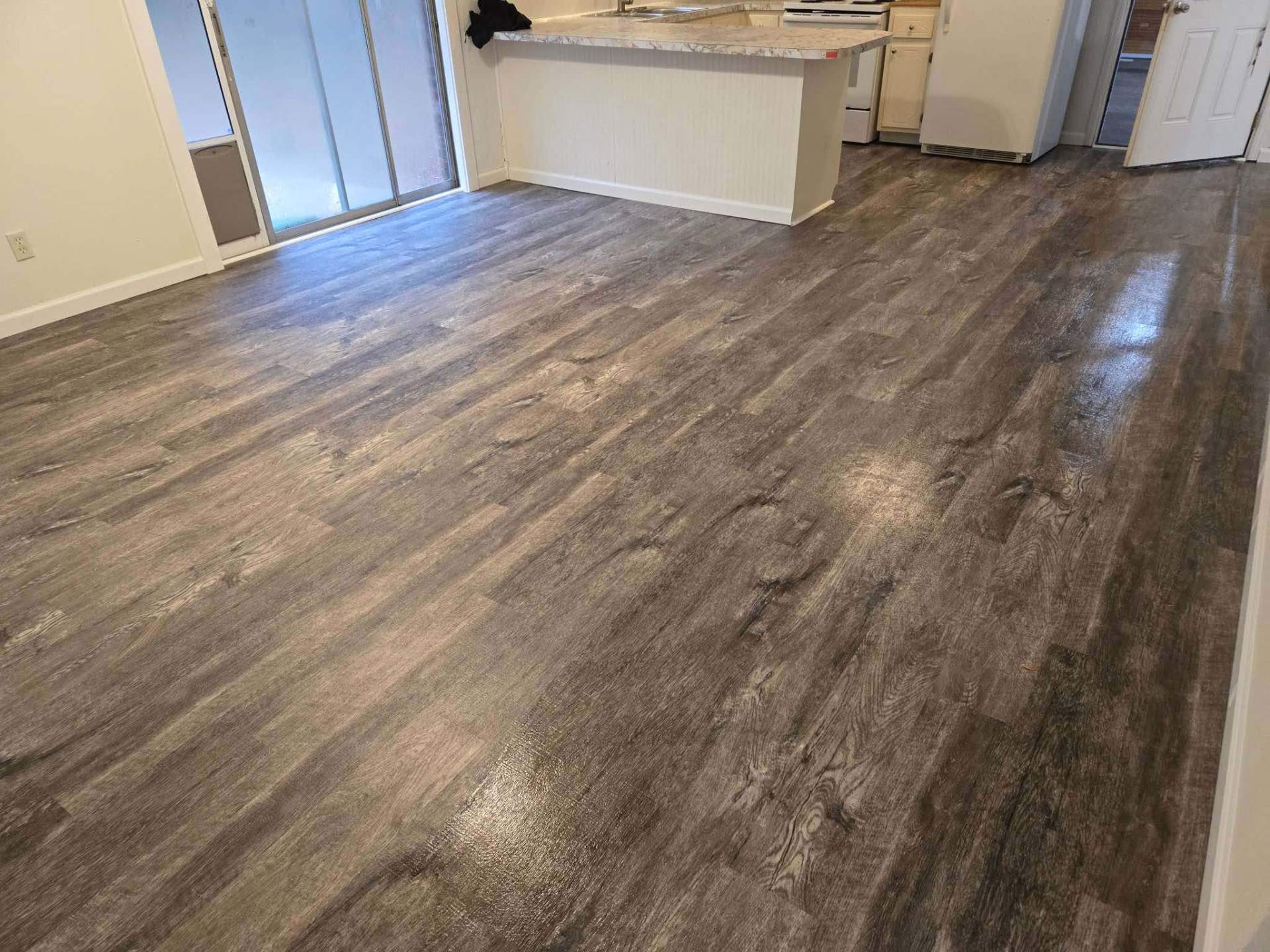
Luxury vinyl plank consistently ranks as the lowest-maintenance flooring option available. Its combination of waterproof construction, durable wear layer, and simple care requirements makes it ideal for busy households.
Routine Care Requirements
- Weekly: Sweep or vacuum to remove grit and debris. This prevents the abrasive action that gradually dulls surfaces.
- As needed: Damp mop with water and mild cleaner. No special products required—dish soap works fine.
- Never needed: Waxing, polishing, refinishing, or professional treatments.
Why LVP Excels at Low Maintenance
- 100% waterproof: Spills aren't emergencies. Clean them up when convenient—no rushing to prevent damage.
- Stain-resistant surface: The wear layer resists most household stains without special treatment.
- No sealing required: Unlike tile grout or natural stone, LVP never needs sealing.
- Scratch concealment: Minor scratches are less visible than on hardwood or laminate.
- No special cleaners: Any mild floor cleaner works; no manufacturer-specific products required.
LVP Maintenance Tips
- Use felt pads under furniture legs
- Avoid rubber-backed mats (can discolor the floor)
- Don't use abrasive scrub pads
- Skip the wax and polish—they're not needed and can create buildup
Best Rooms for LVP
LVP works in every room including bathrooms, kitchens, laundry rooms, and basements where moisture resistance matters. It's particularly ideal for:
- Homes with young children (spill-proof)
- Pet owners (waterproof, scratch-resistant)
- Busy families who want one flooring type throughout
- Rental properties (durable, easy tenant turnover)
Explore our luxury vinyl plank collection or learn more about what makes LVP different.
Porcelain & Ceramic Tile
Maintenance Level: Low
Tile flooring offers exceptional durability and easy surface care, but grout maintenance affects its overall rating. With proper grout choices, tile can be nearly as easy to maintain as LVP.
Routine Care Requirements
- Weekly: Sweep and mop. Tile surfaces clean easily with any floor cleaner.
- Annually: Seal grout lines to prevent staining (can skip with epoxy grout).
- As needed: Deep clean grout with brush and grout cleaner.
Why Tile Performs Well
- Virtually indestructible surface: Won't scratch, dent, or fade
- 100% waterproof: Tile itself is impervious to moisture
- Stain-proof glazed surface: Most substances wipe right off
- No refinishing ever: Tile maintains its appearance indefinitely
- Decades of life: Properly installed tile lasts 50+ years
The Grout Factor
Grout is tile's maintenance weak point. Standard cement grout is porous and stains without sealing. Minimize grout maintenance by:
- Choosing epoxy grout: More expensive but never needs sealing and highly stain-resistant
- Selecting darker grout colors: Gray or charcoal grout hides staining better than white
- Using larger format tiles: Fewer grout lines mean less grout to maintain
- Sealing immediately after installation: Prevents staining from the start
Best Rooms for Tile
- Bathrooms (ultimate moisture resistance)
- Kitchens (durability and easy cleanup)
- Entries and mudrooms (handles heavy traffic and dirt)
- Laundry rooms (water resistance)
Browse our ceramic and porcelain tile selection.
Laminate Flooring
Maintenance Level: Low (with caveats)
Laminate offers low maintenance in terms of treatments and professional care, but requires more careful daily attention due to its vulnerability to moisture.
Routine Care Requirements
- Weekly: Sweep or vacuum. Dry mop or damp mop with minimal water.
- Immediately: Clean up any spills—water damages laminate cores.
- Never needed: Waxing, polishing, or refinishing.
Laminate Strengths
- No finishing treatments: Never needs wax, polish, or sealant
- Excellent wear resistance: Quality laminate resists scratches well
- Budget-friendly: Low initial cost and no ongoing treatment expenses
- Easy replacement: Click-lock systems allow damaged plank replacement
The Moisture Challenge
Laminate's core is made of wood-based material that swells when wet. This critical limitation means:
- Spills require immediate attention—not "clean it up later"
- No wet mopping—use barely damp or dry methods
- Not suitable for bathrooms, laundry rooms, or basements
- Kitchens are borderline—possible with careful attention
Best Rooms for Laminate
- Bedrooms (low moisture, low traffic)
- Living rooms (if careful with spills)
- Home offices (dry environment)
- Dining rooms (with vigilant spill response)
Learn more about laminate flooring options or compare laminate vs. vinyl.
Higher Maintenance Options Worth Understanding
Some beautiful flooring options require more care. Understanding their maintenance demands helps you decide if the trade-off is worthwhile for your situation.
Solid Hardwood
Maintenance Level: High
- Weekly: Sweep or vacuum with hardwood-appropriate attachment
- Monthly: Clean with hardwood-specific cleaner (not general floor cleaner)
- Every 3-5 years: Screen and recoat finish in high-traffic areas
- Every 7-10 years: Full sand and refinish
- Ongoing: Maintain 35-55% humidity, protect from sunlight, clean spills immediately
Why choose it anyway: Nothing matches real hardwood's beauty, value appreciation, and multi-generational potential. If you're willing to invest the care, hardwood rewards you.
Natural Stone
Maintenance Level: Moderate-High
- Daily: Sweep to remove grit that can scratch softer stones
- Weekly: Mop with pH-neutral, stone-safe cleaner only
- 1-2x yearly: Reseal to prevent staining
- Avoid: Acidic cleaners (vinegar, lemon), which etch marble and limestone
Why choose it anyway: Natural stone offers unmatched luxury, uniqueness, and lasting value. Granite and slate are more forgiving; marble and limestone demand more care.
Carpet
Maintenance Level: High
- 2-3x weekly: Vacuum to prevent dirt grinding into fibers
- Immediately: Treat stains—they set quickly in carpet fibers
- Annually: Professional deep cleaning
- Ongoing: Rotate furniture to prevent crushing patterns
Why choose it anyway: Nothing matches carpet's warmth, sound absorption, and comfort—especially in bedrooms. If comfort matters more than easy care, carpet delivers.
Room-by-Room Recommendations
Different rooms have different maintenance challenges. Here's how to optimize low-maintenance flooring throughout your home:
Kitchens
Best choice: LVP or Porcelain Tile
Kitchens see spills, dropped items, and heavy traffic. Both LVP and tile handle these challenges without demanding excessive care. Avoid hardwood (water damage risk) and laminate (moisture vulnerability).
Bathrooms
Best choice: LVP or Porcelain Tile
Moisture resistance is critical. Both options handle bathroom humidity and splashes. LVP is warmer underfoot; tile is more traditional. Never use hardwood or laminate in bathrooms.
Living Rooms/Family Rooms
Best choice: LVP
High traffic and potential spills make LVP ideal. If you prefer hardwood aesthetics, LVP provides the look with far less maintenance. Tile works but may feel cold.
Bedrooms
Best choice: LVP or Carpet
Bedrooms are lower maintenance environments. LVP offers easy care; carpet provides warmth and comfort if you don't mind vacuuming. Hardwood works here too if you want it elsewhere in the home.
Entries and Mudrooms
Best choice: Porcelain Tile or LVP
These high-traffic areas need durability and easy cleaning. Tile handles the heaviest abuse; LVP offers similar performance with warmer feel. Both resist tracked-in dirt and moisture.
Basements
Best choice: LVP
Moisture potential makes LVP the clear winner. Its waterproof construction handles basement humidity and minor flooding that would destroy other options. Tile is possible but cold.
Universal Tips for Minimizing Floor Maintenance
Regardless of flooring type, these habits minimize maintenance for any floor:
Prevention Beats Cleaning
- Quality entry mats: Trap 80% of dirt at the door. This single habit reduces cleaning by half.
- No-shoes policy: Shoes track in grit that scratches floors and dirt that requires cleaning.
- Furniture pads: Felt pads prevent scratches and make furniture movement easier.
- Area rugs: Protect high-traffic zones and under dining tables.
Smart Cleaning Habits
- Microfiber everything: Microfiber mops and cloths clean better and faster than cotton.
- Less is more: Too much water or cleaner leaves residue. Light and fast beats heavy and slow.
- Regular beats occasional: Quick weekly cleaning prevents buildup that requires deep cleaning.
- Right tools: A good vacuum with hard floor settings makes weekly maintenance easier.
Strategic Choices
- Medium tones hide most: Very light or very dark floors show dust, hair, and dirt more than mid-tones.
- Matte finishes hide scratches: High-gloss floors show every imperfection; matte finishes are forgiving.
- Textured surfaces hide wear: Hand-scraped or textured LVP hides scratches better than smooth.