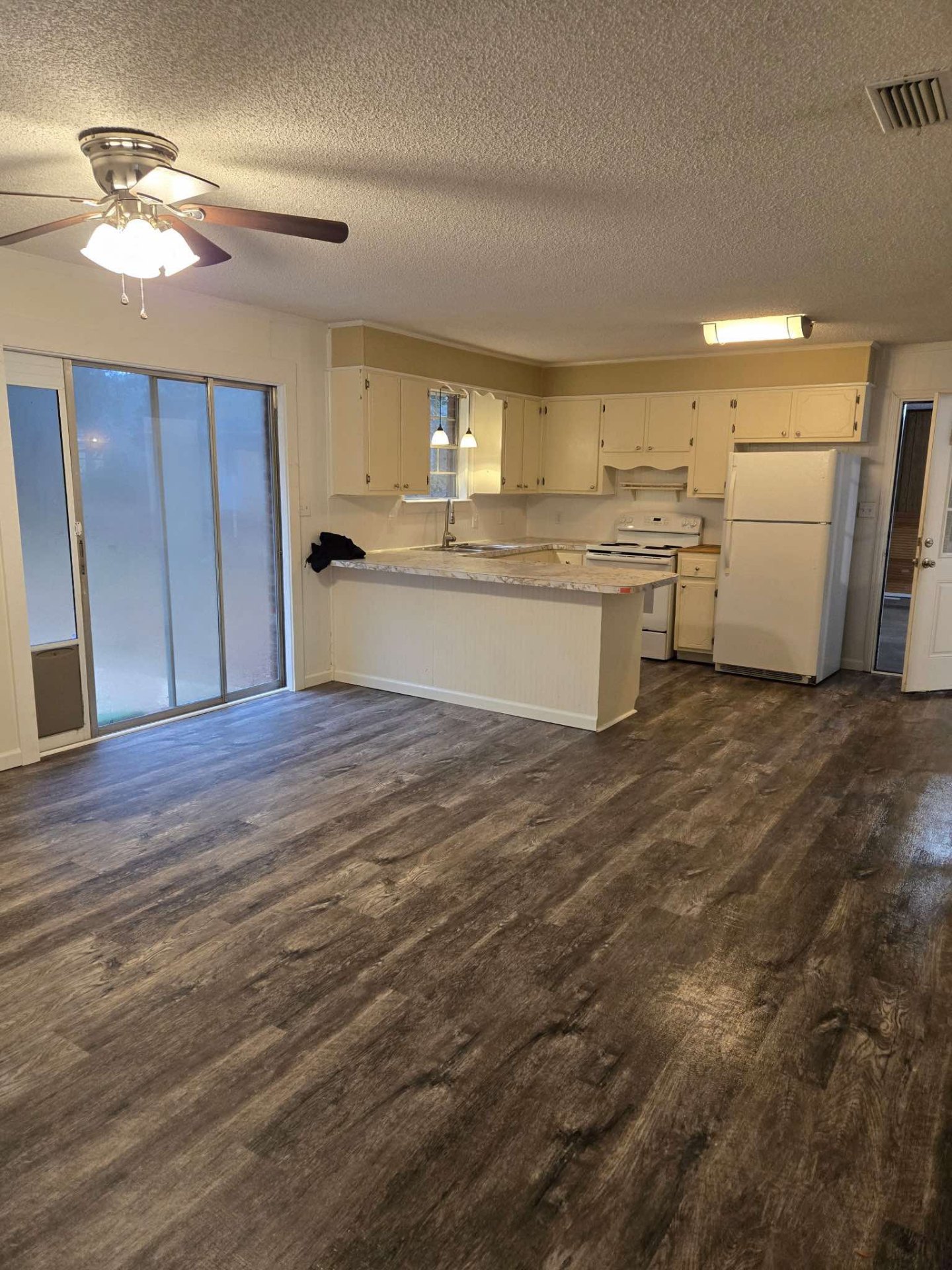
Tile is the flooring that lasts forever — literally. A properly installed porcelain floor will outlast the house it's in. But that durability comes with higher upfront costs than carpet, laminate, or LVP. The question most Pensacola homeowners ask isn't whether tile is worth it — it's whether the costs fit their budget and which type of tile gives them the best value for their specific rooms. Here's what tile instalation actually costs in the Gulf Coast market in 2026, with real numbers from real projects.

Tile Material Costs Per Square Foot in 2026
Tile material costs in Pensacola range from $1 to $25+ per square foot depending on the type. The spread is enormous because 'tile' covers everything from basic ceramic to imported Italian marble.
Ceramic tile ($1-5/sq ft material) — Made from natural clay fired at lower temperatures than porcelain. Lighter weight, easier to cut, and the most affordable tile option. Ceramic works well for walls, backsplashes, and low-to-moderate traffic floors. It's more porous than porcelain (3-7% water absorption vs porcelain's <0.5%), so we recommend sealing ceramic in moisture-prone areas. For Pensacola bathrooms and kitchens on a budget, ceramic delivers decades of performance at an accessible price point.
Porcelain tile ($2-8/sq ft material) — Fired at higher temperatures than ceramic, creating a denser, harder tile with near-zero water absorption. Porcelain handles heavy traffic, resists scratching, and is available in stunning wood-look, stone-look, and concrete-look designs. Full-body porcelain (color runs through the entire tile, not just the surface glaze) is the most durable option for floors. Porcelain is our most-recommended tile for Gulf Coast homes — its moisture resistance makes it ideal for kitchens, bathrooms, and outdoor spaces.
Natural stone tile ($5-25/sq ft material) — Marble, travertine, slate, and granite. Each stone has unique characteristics: marble is elegant but porous and requires regular sealing; travertine creates warm Mediterranean aesthetics; slate offers rustic texture with natural slip resistance; granite is extremly hard and durable. Natural stone costs significantly more than manufactured tile and requires more careful installation — compatible mortars, proper sealing, and experienced handling. But nothing matches the look and feel of real stone.
Tile Installation Labor Costs in Pensacola
Tile installation labor in the Pensacola area runs $3-8 per square foot — more than any other flooring type because tile demands the most skill, time, and specialized tools.
Standard floor tile ($3-5/sq ft labor) — Basic straight-lay or offset pattern with standard 12x12 or 12x24 tiles on a prepared subfloor. Includes thinset application, tile setting, spacing, grouting, and cleanup. This is the base rate for rectangular rooms with minimal cuts.
Complex floor tile ($5-7/sq ft labor) — Large-format tiles (24x24 or larger) requiring leveling systems, diagonal or herringbone patterns, rooms with many cuts (around cabinets, islands, doorways), or tile over concrete slabs requiring crack isolation membrane. Large-format tile takes longer because each piece is heavier, harder to cut, and requires back-buttering for full mortar coverage.
Shower tile ($6-8/sq ft labor) — The most labor-intensive tile work. Includes cement board installation, waterproofing membrane application (Kerdi, RedGard, or similar), mud bed or foam shower pan, tile setting on walls and floor, and grouting with epoxy or sealed grout. A shower tile project involves multiple trades' worth of skill in one installer.
Backsplash tile ($8-15/sq ft labor) — Higher per-square-foot labor cost because backsplashes involve small areas with many cuts, outlet boxes, and window returns. The actual square footage is low (typically 15-30 sq ft), so the total project cost is manageable despite the high per-sqft rate.
Additional costs to plan for: subfloor leveling ($1-3/sq ft if needed), old flooring demo ($1-3/sq ft), cement board for walls ($2-3/sq ft), waterproofing membrane ($2-5/sq ft for showers), and grout sealing ($0.50-1/sq ft).
Total Tile Cost — Real Pensacola Project Examples
All-in costs for tile projects in the Pensacola and Gulf Coast market in 2026:
Kitchen floor (120 sq ft) — Ceramic: $960-1,680
Ceramic tile ($3/sq ft) + prep and installation ($5/sq ft) = approximately $8/sq ft total. A standard kitchen done in 2-3 days.
Kitchen floor (120 sq ft) — Porcelain: $1,200-2,160
Mid-range porcelain ($4/sq ft) + prep and installation ($6/sq ft) = approximately $10/sq ft total. Wood-look porcelain in the kitchen is hugley popular in Pensacola right now.
Bathroom floor (60 sq ft) — Porcelain: $480-720
Standard porcelain with basic layout. Most bathroom floors are small enough that material cost is modest — labor is the bigger line item.
Shower surround (80 sq ft walls + floor) — Porcelain: $1,200-2,000
Includes waterproofing, cement board, wall tile, floor tile, niche, and epoxy grout. Showers are the most expensive tile projects per square foot but typically only 60-100 sq ft total.
Whole house floor tile (1,000 sq ft) — Porcelain: $8,000-14,000
Porcelain tile throughout living areas, kitchen, bathrooms, and hallways. A significant investment that lasts 50-100+ years with zero maintenance beyond occasional grout resealing.
For your specific project: see our full pricing guide or call (850) 903-3703.
How Tile Costs Compare to Other Flooring
Tile is mid-to-upper range in upfront cost but has the lowest per-year cost of any flooring due to its extreme longevity.
Tile vs LVP: Tile $5-12/sq ft vs LVP $4-8/sq ft installed. LVP costs less and installs faster. Tile lasts 2-4x longer. Both are waterproof. Tile is harder and colder underfoot; LVP is warmer and softer. For bathrooms and showers, tile is still the better choice. For kitchens and living areas, LVP offers comparable performance at a lower price.
Tile vs hardwood: Tile $5-12/sq ft vs hardwood $8-15/sq ft installed. Similar price range. Tile is waterproof and lasts 50-100+ years. Hardwood is warmer, can be refinished, and adds more ambiance. Tile wins for moisture-prone rooms; hardwood wins for living areas where warmth matters.
Tile vs carpet: Tile $5-12/sq ft vs carpet $2-5/sq ft installed. Tile costs 2-3x more upfront but carpet needs replacing every 10-15 years while tile lasts forever. Over 30 years, their costs converge. Carpet is softer for bedrooms; tile is essential for bathrooms and kitchens.
Tile vs laminate: Tile $5-12/sq ft vs laminate $3-6/sq ft installed. Laminate is cheaper, faster to install, and warmer underfoot. Tile is waterproof (laminate is not), far more durable, and essential for wet areas. Laminate is a good budget choice for dry rooms; tile is non-negotiable for bathrooms and kitchens in the Gulf Coast.
Where to Save on Tile Installation Without Cutting Corners
Choose porcelain over natural stone. Modern porcelain convincingly mimics marble, travertine, and slate at 50-70% less cost. A marble-look porcelain at $4/sq ft is virtually indistinguishible from real marble at $15/sq ft once installed — and it's easier to maintain, doesn't need sealing, and won't stain from wine or tomato sauce.
Standard sizes cost less to install. 12x12 and 12x24 tiles are the most efficient to install. Tiny mosaics (2x2, hexagon) require more labor per square foot. Giant format (24x48, 36x36) requires specialized tools and leveling systems. Unless the design demands a specific size, standard formats save on labor.
Simple patterns save labor. Straight-lay and basic offset patterns are fastest. Herringbone, diagonal, and Versailles patterns add 15-25% to labor cost from additional cuts and layout complexity. Save the fancy patterns for a small accent area rather than the entire floor.
Porcelain in showers, ceramic on walls. You need porcelain's water resistance on shower floors and lower walls. Upper walls and decorative accents can use less expensive ceramic since they're not constantly saturated. This hybrid approach saves $1-3/sq ft on wall areas without compromising performance.
Get your free tile consultation. Day Flooring brings tile samples to your Pensacola home, assesses your subfloor, and provides a detailed estimate covering every cost — materials, labor, prep, trim, and waterproofing. No surprises after the work starts. Call (850) 903-3703.
Frequently Asked Questions
Tile installation in Pensacola costs $5-12 per square foot fully installed. Ceramic tile runs $5-8/sq ft total, porcelain $6-12, and natural stone $10-25. These include materials, thinset, grout, and professional labor. Shower tile costs more ($8-15/sq ft) due to waterproofing and cement board requirements.
Tile requires more time, skill, and materials than other flooring types. Subfloor prep is more demanding (flatter surface required), thinset mortar and grout are separate material costs, specialized tools are needed (wet saws, leveling systems), and each tile must be individually set and checked. Showers add waterproofing and backer board. The labor intensity drives tile costs above carpet, laminate, and LVP.
A complete tile shower installation in Pensacola typically costs $1,200-2,500 for an average-sized shower (60-100 sq ft of wall and floor). This includes cement board, waterproofing membrane, porcelain tile, niche, grout, and trim pieces. Premium stone tile or complex patterns can push costs to $3,000-5,000.
For floors, bathrooms, and kitchens — yes. Porcelain absorbs less than 0.5% moisture versus ceramic's 3-7%, making it far more durable in Gulf Coast humidity. Porcelain is harder, more scratch-resistant, and available in realistic wood and stone looks. The $1-3/sq ft premium over ceramic is well worth it for any area that sees moisture or heavy traffic.
Sometimes. If existing tile is well-bonded, level, and in good condition, new tile can be installed over it using a bonding agent — saving $1-3/sq ft in demolition costs. However, this raises the floor height (potential door clearance issues), and if the old tile wasn't installed properly, problems transfer to the new layer. We assess each situation individually during your free consultation.