
When Do You Need a Permit?
Permit requirements vary by jurisdiction, but general principles apply across most areas. Understanding when permits are required helps you plan projects correctly and avoid enforcement issues.
Typically No Permit Required
- Simple replacement: Removing existing flooring and installing new flooring of similar type without structural changes
- Cosmetic updates: Refinishing hardwood, replacing carpet with LVP, or updating tile
- Minor repairs: Replacing damaged sections, fixing squeaks, or addressing small problem areas
Permits Usually Required
- Subfloor modifications: Cutting, reinforcing, or replacing structural subfloor components
- Radiant floor heating: Electrical or hydronic systems typically require permits and inspections
- Commercial installations: Business properties often require permits for any flooring work
- Multi-family buildings: Condos and apartments may have association requirements plus local permits
- Part of larger renovation: If the project includes plumbing, electrical, or structural work requiring permits
- Changes affecting egress: Modifications that affect exit paths or fire safety
- Floor height changes: Significant changes in floor height that affect doorways, stairs, or accessibility
Florida-Specific Considerations
Florida's building departments vary by county but generally follow the Florida Building Code. In Escambia and Santa Rosa counties:
- Simple residential flooring replacement typically doesn't require permits
- Work in flood zones may trigger additional requirements
- Condo associations often have their own approval processes separate from building permits
- Commercial work requires contractor licensing verification
Best practice: Call your local building department before starting work. A quick phone call can save significant problems later.
Subfloor Requirements
Proper subfloor preparation is essential for code compliance and long-term flooring performance. Building codes establish minimum standards, but exceeding them often produces better results.
Flatness Standards
Subfloors must be flat within specified tolerances:
- General standard: 3/16" (4.8mm) variance over a 10-foot span
- Tile installations: 1/8" (3mm) variance over 10 feet for large format tile
- Floating floors: Manufacturer specifications vary; typically 3/16" to 1/4" per 10 feet
- Glue-down installations: Stricter flatness requirements; follow adhesive manufacturer specs
High spots must be sanded or ground down. Low spots require leveling compound. Significant issues may require plywood overlays.
Moisture Requirements
Moisture testing is often code-required for commercial work and always advisable:
- Concrete slabs: Maximum 3-4 lbs moisture emission per 1000 sq ft per 24 hours (calcium chloride test) or 75-80% relative humidity (in-situ probe test)
- Wood subfloors: Moisture content should be within 2-4% of the flooring material being installed
- Below-grade installations: Require moisture barriers and specific product approvals
Florida's humidity makes moisture testing particularly important. Failing to address moisture leads to flooring failures that won't be covered by warranties.
Structural Requirements
- Deflection limits: Subfloors shouldn't deflect more than L/360 (span divided by 360) under normal loads
- Joist spacing: Determines minimum subfloor thickness; wider joist spacing requires thicker subfloor
- Load capacity: Must support expected loads including heavy furniture, equipment, and occupants
- Fastening: Subfloor panels must be properly fastened to prevent squeaks and movement
Height Transitions
Where flooring heights change at doorways or between rooms:
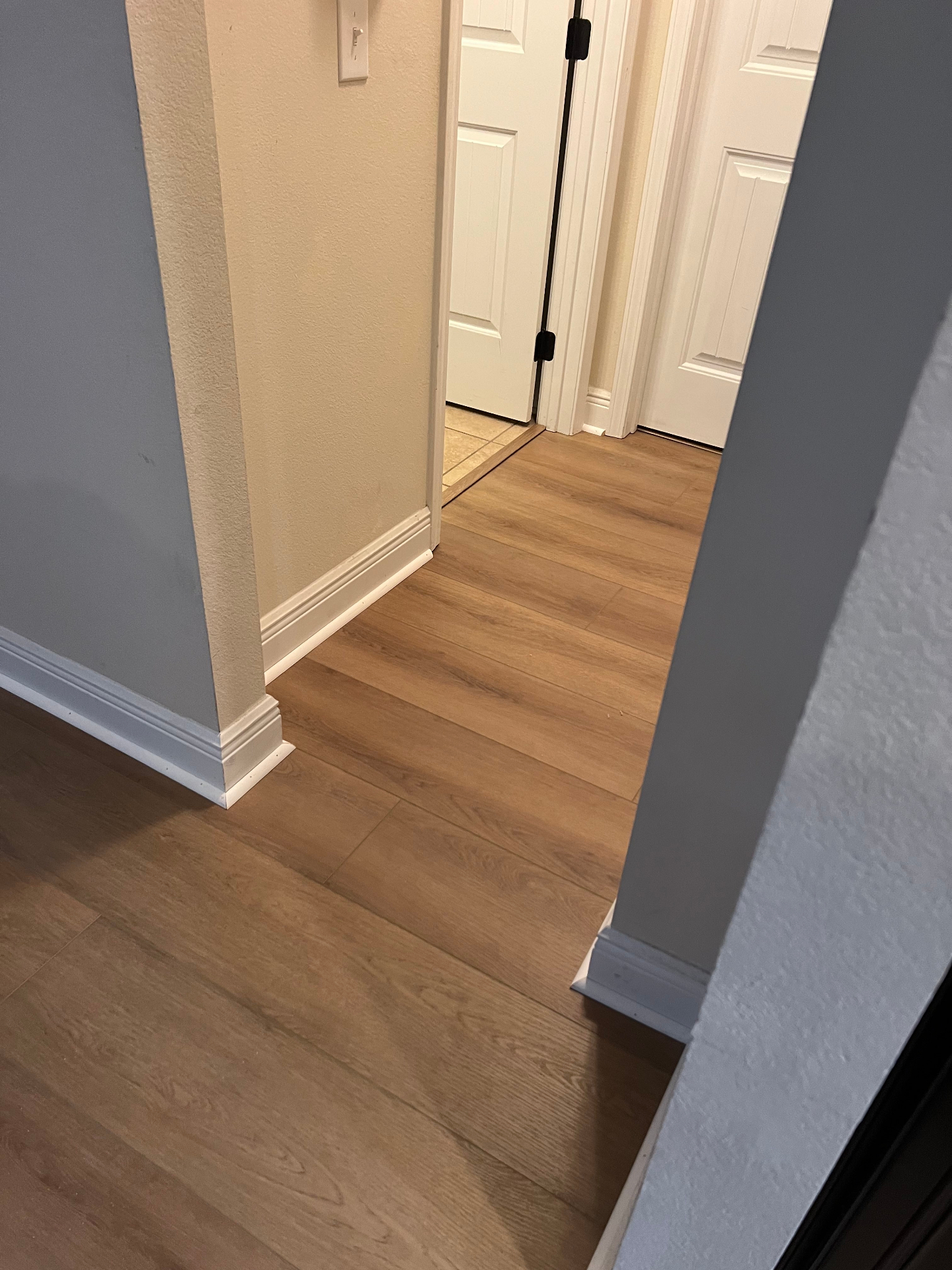
- Code maximum: Generally 1/2" (12.7mm) height difference allowed
- ADA requirement: 1/4" (6.4mm) maximum for accessibility compliance
- Transition strips: Required to bridge height differences safely
Fire Safety Requirements
Flooring fire ratings measure how materials behave in fire conditions. While residential requirements are minimal, understanding these ratings helps you make informed choices.
Flame Spread Classifications
ASTM E84 testing classifies flooring by flame spread index:
- Class A (Class I): Flame spread index 0-25. Most fire-resistant. Required in commercial exit corridors, assembly spaces, and high-rise buildings.
- Class B (Class II): Flame spread index 26-75. Moderate fire resistance. Suitable for most commercial applications.
- Class C (Class III): Flame spread index 76-200. Basic fire resistance. Acceptable for most residential applications.
Residential vs. Commercial Requirements
Residential (Single-Family Homes)
- No specific flame spread requirements for most flooring
- Any common flooring material (hardwood, carpet, vinyl, tile) is acceptable
- Some localities have requirements near fireplaces or wood stoves
Multi-Family Residential
- Common areas and corridors may require Class B or Class A flooring
- Exit paths typically require higher fire ratings
- Individual units may have residential-level requirements
Commercial Buildings
- Exit corridors typically require Class A or B flooring
- Assembly spaces (restaurants, theaters) have specific requirements
- Healthcare facilities have strict flooring specifications
Critical Radiant Flux
For carpet and certain flooring in commercial settings, critical radiant flux (CRF) testing measures resistance to fire spread:
- Class I: CRF of 0.45 watts/cm2 or greater—required in exit corridors
- Class II: CRF of 0.22 watts/cm2 or greater—acceptable for most commercial areas
Florida Building Code Specifics
The Florida Building Code incorporates International Building Code requirements with modifications. Key points:
- Single-family residential has minimal flooring fire requirements
- Condos and multi-family buildings follow commercial requirements in common areas
- High-rise buildings (over 75 feet) have enhanced requirements
Slip Resistance Standards
Slip-and-fall injuries are the leading cause of premises liability claims. While residential codes rarely mandate slip resistance, commercial projects and wet areas have specific requirements.
Measuring Slip Resistance
Several methods measure slip resistance:
- Static Coefficient of Friction (SCOF): Traditional measurement using various test methods. ASTM C1028 was the standard but has been withdrawn.
- Dynamic Coefficient of Friction (DCOF): Current preferred method using ANSI A137.1 testing. Measures friction during movement, which better represents actual slip conditions.
- Pendulum testing: British and Australian method (PTV) increasingly recognized internationally.
DCOF Requirements
The Tile Council of North America recommends:
- Level interior, dry: DCOF >= 0.42
- Level interior, wet: DCOF >= 0.42 (wet testing required)
- Ramps and slopes: Higher DCOF values recommended
- Exterior and wet areas: DCOF >= 0.60 recommended for safety
Where Slip Resistance Matters Most
- Bathrooms: Wet conditions demand higher slip resistance; consider textured tile or appropriate LVP
- Kitchens: Grease and water spills increase slip risk; avoid highly polished surfaces
- Entries: Tracked-in water creates slip hazards; use appropriate transition mats and slip-resistant flooring
- Pool surrounds: Constantly wet areas need highest slip resistance ratings
- Commercial restrooms: ADA and building codes require specific slip resistance
Residential Considerations
While residential codes rarely mandate slip resistance, wise choices prevent injuries:
- Avoid highly polished tile in bathrooms
- Choose textured or matte finish tile for wet areas
- LVP typically provides good slip resistance in wet conditions
- Consider slip resistance when aging in place
ADA Accessibility Requirements
The Americans with Disabilities Act (ADA) establishes flooring requirements for public accommodations and commercial facilities. While not legally required in private residences, these standards provide excellent guidance for aging-in-place and universal design.
Where ADA Applies
- Public accommodations: Stores, restaurants, hotels, medical offices, etc.
- Commercial facilities: Office buildings, warehouses, factories
- State and local government: All government buildings and programs
- New construction: All covered buildings must be accessible
- Alterations: Renovations must improve accessibility where feasible
Flooring-Specific ADA Requirements
Surface Characteristics
- Firm and stable: Flooring must provide stable surface for wheelchairs and walkers
- Slip resistant: Must be slip-resistant when wet or dry
- Not heavily textured: Excessive texture impedes wheelchair movement
Transitions and Thresholds
- Maximum height: Changes in level cannot exceed 1/4" (6.4mm) vertical
- Beveled transitions: Height changes between 1/4" and 1/2" must be beveled at 1:2 slope maximum
- No abrupt changes: Greater height differences require ramps with specific slope requirements
Carpet Requirements
- Pile height: Maximum 1/2" (13mm)
- Firm backing: Must have firm cushion or backing
- Exposed edges: Must be fastened to floor and have trim along exposed edges
- Padding: Firm padding only; soft padding impedes wheelchair movement
Residential Accessibility
Even in private homes, accessibility features provide value:
- Aging in place: Accessible design allows continued independence as mobility changes
- Resale value: Accessible homes appeal to wider buyer pool
- Visiting family/friends: Accessible homes accommodate visitors with disabilities
- Temporary injuries: Crutches, wheelchairs after surgery benefit from accessible design
Best Flooring for Accessibility
- LVP: Excellent—smooth, firm, slip-resistant, minimal transitions
- Hardwood: Good—smooth surface, but requires careful transition management
- Tile: Good—firm and durable, but grout lines can be challenging; use larger format tiles
- Low-pile carpet: Acceptable with firm backing; avoid plush or high-pile
Florida-Specific Code Considerations
Florida's unique climate and building environment create specific flooring considerations beyond standard building codes.
Florida Building Code
Florida has its own building code based on the International Building Code with modifications for:
- Hurricane and wind resistance (primarily affects structural elements)
- Flood zone construction requirements
- Energy efficiency standards
- Moisture and humidity considerations
Flood Zone Requirements
Properties in flood zones (common along the Gulf Coast) face specific requirements:
- Base flood elevation: Lowest floor may need to be at or above BFE
- Flood-resistant materials: In flood-prone areas, materials below BFE must resist flood damage
- FEMA recommendations: Tile, concrete, and properly installed LVP are considered flood-resistant
- Insurance implications: Material choices affect flood insurance premiums
Humidity and Moisture
While not strictly "code" issues, Florida's humidity creates practical requirements:
- Acclimation: Flooring must acclimate to local humidity before installation
- Moisture testing: Essential for concrete slab installations
- Vapor barriers: Critical for below-grade and slab-on-grade installations
- Product selection: Dimensionally stable products (LVP, tile, engineered hardwood) perform better than solid hardwood in Florida's climate
Condo and HOA Requirements
Beyond building codes, many Florida properties have additional requirements:
- Sound transmission: Many condos require STC (Sound Transmission Class) and IIC (Impact Insulation Class) ratings for flooring
- Installation methods: Some associations mandate floating installation only
- Approval processes: Material and installer approvals may be required before work begins
- Working hours: Construction hour restrictions are common
For professional guidance on code-compliant flooring installation in Pensacola and the surrounding area, contact our team.