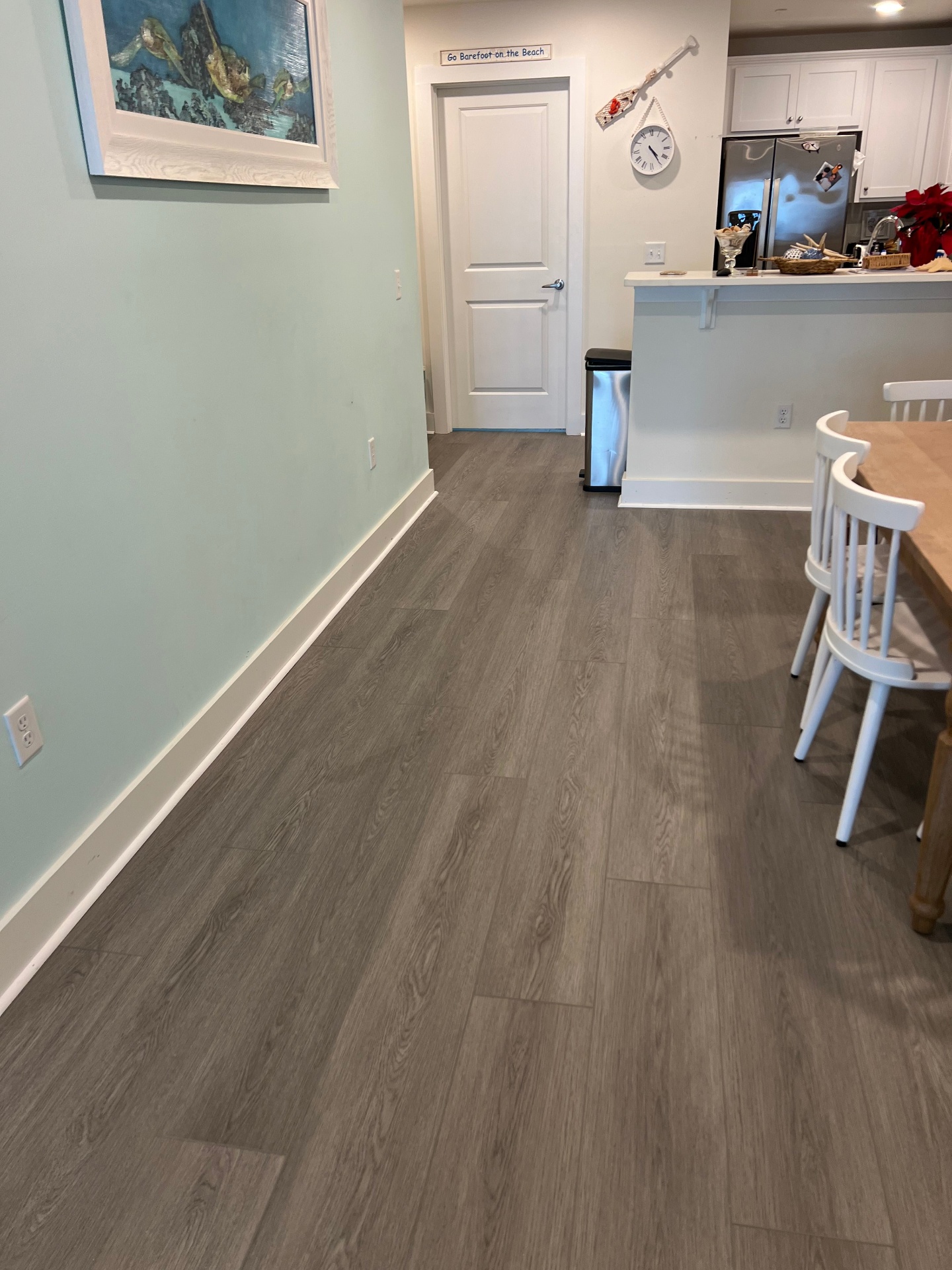
Living on the Gulf Coast means living with moisture. Humidity that never drops below 60%, summer thunderstorms that blow rain through open doors, pet bowls that get knocked over, and the ever-present risk of tropical storms. If your flooring can't handle water, you're fighting a losing battle. The good news: today's waterproof flooring options are better-looking, more affordable, and more durable than anything available even five years ago. Here's what actually works for Pensacola homes — and what 'water-resistant' marketing claims realy mean.
What 'Waterproof' Actually Means in Flooring
First, let's clear up the marketing confusion. There's a massive difference between waterproof and water-resistant, and flooring companies love to blur that line.
Truly waterproof flooring can be submerged in water indefinitely without damage. The material itself does not absorb moisture. Period. Only two common flooring types qualify: luxury vinyl plank (LVP) and porcelain tile. LVP's vinyl construction is impervious to water. Porcelain absorbs less than 0.5% moisture — essentially zero.
Water-resistant flooring handles splashes and brief exposure but will be damaged by standing water or prolonged moisture. This category includes: sealed engineered hardwood (surface is protected, but the wood core swells from prolonged exposure), water-resistant laminate (sealed edges and treated core resist splashes, but the HDF core will swell from standing water), and ceramic tile (more porous than porcelain at 3-7% water absorption — functional but not truly waterproof).
NOT waterproof at all: standard laminate (destroyed by water), solid hardwood (cupping, warping, mold from moisture), and carpet (absorbs moisture, breeds mold). In a Gulf Coast home, using non-waterproof flooring in a kitchen, bathroom, or laundry room is asking for trouble.
The Best Waterproof Flooring Options for Pensacola
For Gulf Coast homes, two products dominate the waterproof flooring conversation — and for good reason.
Luxury Vinyl Plank (LVP) — The Gulf Coast Favorite
LVP is the #1 flooring choice in the Pensacola area and it's not close. The vinyl construction is 100% waterproof through the entire plank — not just the surface. Spill a gallon of water and walk away for a week — the LVP won't care. SPC (stone polymer composite) rigid core versions won't expand, contract, or warp from temperture changes or humidity swings. And the wood-look and stone-look designs available today are genuinely impressive — visitors regularly ask if our LVP installations are real hardwood. Cost: $4-8/sq ft installed. Lifespan: 15-25 years.
Porcelain Tile — The Lifetime Waterproof Choice
Porcelain absorbs less than 0.5% moisture — you can literally submerge it forever without damage. It handles heat, UV, chemicals, scratching, and impact that would destroy any other flooring. Porcelain is the undisputed champion for showers, outdoor spaces, and anywhere that gets truly wet on a daily basis. The trade-off is cost ($5-12/sq ft installed) and the cold, hard surface underfoot. For Gulf Coast bathrooms, kitchens, and outdoor living areas, nothing outperforms porcelain.
Other Waterproof Options
Rubber flooring works for home gyms. Sheet vinyl is waterproof and the cheapest option ($2-4/sq ft installed) but looks more commercial. Concrete with sealed coatings is waterproof for utility spaces. But for living spaces in Pensacola homes, LVP and porcelain tile cover 95% of what homeowners need.
Waterproof Flooring Room by Room — What Works Where
Kitchen — The kitchen sees more water events than any room except the bathroom. Dishwasher leaks, sink splashes, dropped ice, spilled drinks, mopping. LVP is the most popular Pensacola kitchen flooring because it's waterproof, comfortable for standing while cooking, and available in wood-look designs that make open-concept kitchens flow seamlessly into living areas. Porcelain tile is the durability champion but harder on feet and legs during long cooking sessions.
Bathroom — Floors: LVP or porcelain tile, both work excellently. Shower walls and floors: porcelain tile only — LVP is not designed for direct shower spray and constant immersion. Around the toilet and vanity where splashes happen daily, both LVP and tile handle it without issue. The critical factor most people miss: waterproofing underneath matters as much as the surface material. We install proper moisture barriers under bathroom LVP and waterproofing membranes behind shower tile.
Laundry Room — Washing machine overflows are the #1 cause of water damage claims in homes. Your laundry room floor must be waterproof — not water-resistant, not 'handles splashes,' but genuinely waterproof. LVP is our default recomendation for Pensacola laundry rooms.
Entryway — Tracked-in rain, wet shoes, dripping umbrellas — the entryway takes constant moisture abuse. LVP or porcelain tile both handle it. Porcelain is slightly better because it won't show scratching from sand and grit tracked in from Gulf Coast beaches.
Whole House — Many Pensacola homeowners are going all-LVP throughout the entire home — one continuous waterproof surface from the front door to the back bedroom. No transitions, no worrying about which room can handle water, no maintaining different flooring types. It's the most practical whole-house flooring strategy for Gulf Coast living.
Why Waterproof Flooring Matters More on the Gulf Coast
Pensacola's climate creates flooring challenges that people in Denver or Phoenix never think about.
Constant humidity — Gulf Coast humidity regularly exceeds 80% outdoors. Even with air conditioning, indoor humidity in many Pensacola homes sits at 55-65% — the upper end of what hardwood can tolerate and above what laminate handles well long-term. Waterproof flooring doesn't react to humidity at all. No cupping, no gapping, no swelling, no warping.
Moisture vapor through concrete slabs — Florida's high water table pushes moisture vapor up through concrete slabs for the life of the home. This moisture accumulates under non-waterproof flooring, causing mold, mildew, and eventual failure. Waterproof LVP and porcelain tile installed with proper vapor barriers handle this without issue.
Storm risk — Hurricane season means flooding is always a possibility. When water enters a home with carpet or hardwood, everything comes out. When water enters a home with LVP or tile, you dry the floor and move on. We've seen Pensacola homeowners after storm events where LVP survived completly intact while neighboring homes with laminate and carpet needed full replacement.
Indoor-outdoor lifestyle — Gulf Coast living means wet swimsuits, sandy feet, and open sliding doors with salt air. Your flooring needs to handle that daily without special treatment. Waterproof flooring lets you live the coastal lifestyle without tiptoeing around your own floors.
Waterproof Flooring Costs in Pensacola
Here's what waterproof flooring options cost in the Pensacola market in 2026, fully installed:
LVP (most popular waterproof option): $4-8/sq ft installed. Budget SPC at $4-5, mid-range at $5-7, premium at $7-8. Best value for whole-house waterproof flooring.
Porcelain tile: $5-12/sq ft installed. Standard porcelain at $6-9, premium or large-format at $9-12. Best for bathrooms, showers, and outdoor areas where maximum durability matters.
Sheet vinyl: $2-4/sq ft installed. The cheapest waterproof option. Functional but less attractive than LVP or tile. Works for laundry rooms, mudrooms, and utility spaces.
For comparison, here's what NON-waterproof options cost:
Carpet $2-5/sq ft — not waterproof at all. Laminate $3-6/sq ft — water-resistant at best, destroyed by standing water. Hardwood $8-15/sq ft — water-sensitive, requires humidity control. These options work in dry rooms (bedrooms, offices) but should never be used in moisture-prone areas in a Gulf Coast home.
See our complete pricing guide for detailed cost breakdowns by flooring type.
How to Choose the Right Waterproof Flooring
The decision usually comes down to three questions.
1. Is this for a shower or tub surround? If yes, the answer is porcelain tile with proper waterproofing membrane. No other option is approriate for direct, constant water exposure.
2. Is comfort or durability more important? LVP is warmer, softer, and quieter underfoot. Porcelain tile is harder, colder, but lasts 2-4x longer. For kitchens where you stand and cook for hours, LVP's comfort matters. For bathrooms and entryways where you pass through briefly, tile's superior durability is worth the hardness.
3. What's your budget? LVP at $4-8/sq ft gives you waterproof performance at the lowest cost for living spaces. Porcelain at $6-12/sq ft costs more but lasts significantly longer. Sheet vinyl at $2-4/sq ft is the cheapest waterproof option for utility areas.
The right answer for most Pensacola homeowners is LVP throughout the main living areas with porcelain tile in bathrooms, showers, and any outdoor living spaces. This combination gives you whole-house waterproof coverage at the best overall value.
Day Flooring brings samples to your home — see both LVP and tile options in your actual lighting before deciding. Free consultation, no pressure. Call (850) 903-3703.
Frequently Asked Questions
Luxury vinyl plank (LVP) is the best overall waterproof flooring for Florida homes — 100% waterproof, handles humidity without expanding, pet-friendly, and costs $4-8/sq ft installed. For bathrooms and showers, porcelain tile is the gold standard. Both handle Gulf Coast humidity, storm risk, and the indoor-outdoor coastal lifestyle.
Yes — the vinyl construction of LVP does not absorb water at any level. You can submerge it indefinitely. However, water can seep between plank seams and reach the subfloor underneath. Proper installation with tight seam clicks and appropriate underlayment with vapor barrier prevents this. The LVP itself will never be damaged by water.
No. Standard laminate has an HDF (fiberboard) core that swells and permanently deforms when exposed to water. Some laminate products are marketed as 'water-resistant' with sealed edges that handle brief splashes — but standing water from a spill, leak, or pet accident will destroy them. For any moisture-prone room in a Gulf Coast home, choose LVP or tile instead.
No — wood is naturally hygroscopic (absorbs and releases moisture). Surface finishes provide temporary water resistance but don't make hardwood waterproof. Engineered hardwood handles humidity better than solid hardwood, but neither is waterproof. For rooms with regular moisture exposure in Pensacola homes, LVP provides the wood look with actual waterproof performance.
LVP is the most popular waterproof kitchen flooring in Pensacola — comfortable for standing, warm underfoot, wood-look designs that flow into open-concept living areas, and handles spills without damage. Porcelain tile is the more durable option (50-100+ years vs 15-25) but harder on feet during long cooking sessions. Both are excellent choices for Gulf Coast kitchens.