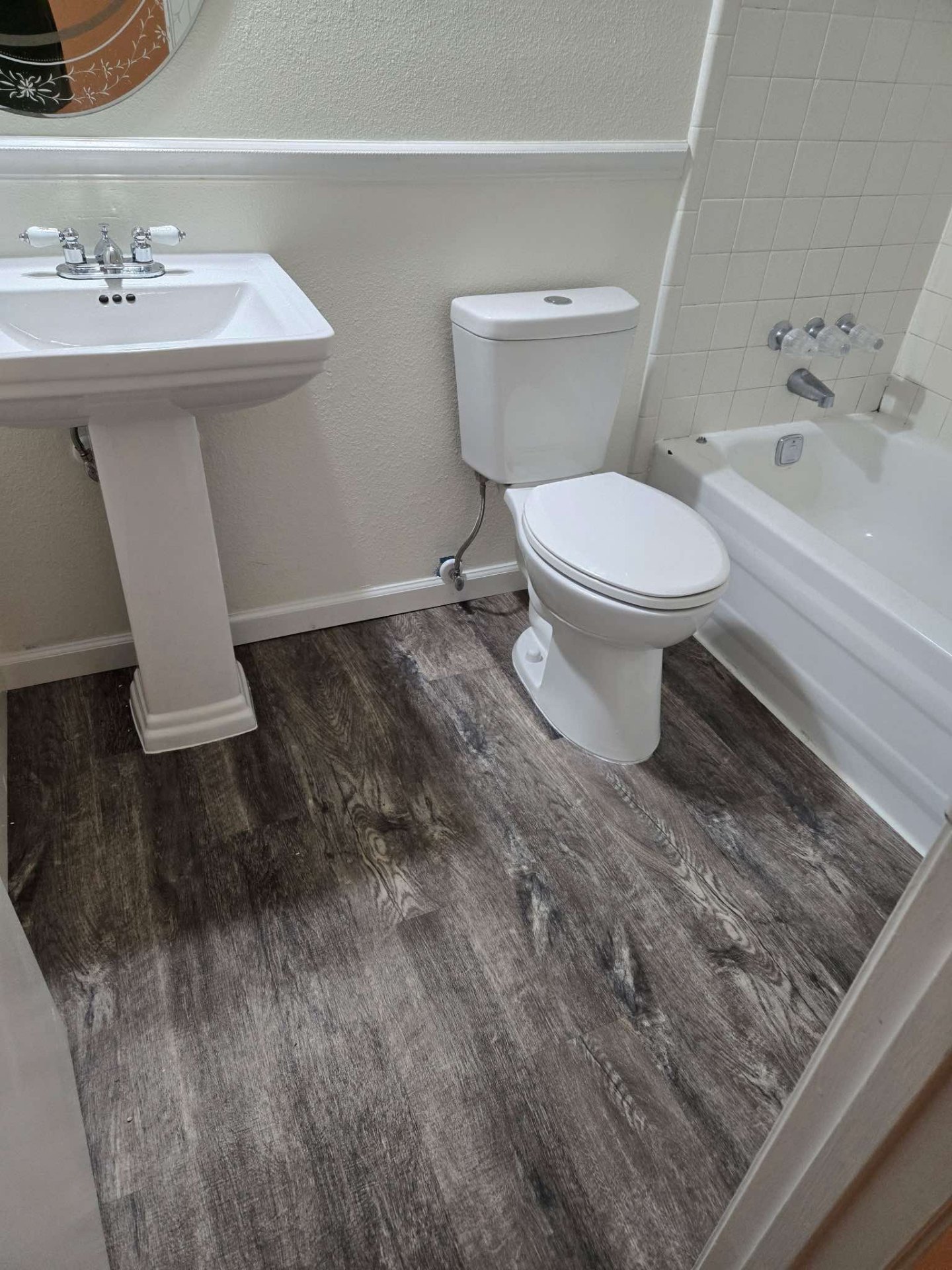

Why Choose Vinyl Plank Flooring
Vinyl plank flooring offers a compelling combination of benefits that have made it the preferred choice for millions of homeowners, particularly those dealing with moisture, active households, or budget constraints.
100% Waterproof Construction
Modern LVP with WPC or SPC cores is completely waterproof—not just water-resistant. This means:
- Standing water won't damage the floor
- Spills can wait hours for cleanup without concern
- Ideal for bathrooms, kitchens, laundry rooms, and basements
- Handles Florida humidity without swelling or warping
- Pet accidents won't cause permanent damage
This waterproof characteristic alone makes LVP the go-to choice for moisture-prone areas where hardwood and laminate would fail.
Exceptional Durability
Quality LVP handles real-life wear better than many natural materials:
- Scratch-resistant wear layers protect against pet claws and furniture
- Dent-resistant cores (especially SPC) withstand dropped objects
- Color runs through the wear layer, so scratches are less visible
- No refinishing needed—ever
Low Maintenance Requirements
LVP is one of the easiest flooring types to maintain:
- Regular sweeping or vacuuming removes debris
- Damp mopping handles deeper cleaning
- No waxing, polishing, or special treatments needed
- No periodic refinishing like hardwood requires
DIY-Friendly Installation
Click-lock floating floor systems make LVP accessible to DIY homeowners:
- No glue, nails, or special tools required
- Planks snap together easily
- Can be installed over most existing floors
- Mistakes are reversible—planks can be disassembled
Many homeowners complete a room in a single day. See our complete installation guide.
Budget-Friendly Pricing
LVP typically costs $2-7 per square foot, including installation. This is significantly less than hardwood ($8-15) or quality tile ($8-20). The lower cost doesn't mean lower quality—LVP simply requires less material and simpler installation.
Vinyl Plank Limitations
Understanding LVP's limitations helps you make an informed decision and ensures satisfaction with your choice.
Not a Natural Material
LVP is a synthetic product—engineered layers of vinyl, polymers, and printed images rather than harvested natural material. While modern LVP looks remarkably realistic, it's not real wood. For homeowners who value authenticity and natural materials, this matters.
Cannot Be Refinished
Unlike hardwood, which can be sanded and refinished multiple times over decades, LVP is a wear-it-out product. Once the wear layer is worn through, the floor needs replacement. Quality products with thick wear layers (20+ mil) last 15-25 years, but they're not multi-generational floors like hardwood.
Value Perception
In some real estate markets, particularly luxury homes, vinyl flooring—regardless of quality—may be perceived as less valuable than hardwood. While attitudes are changing as LVP quality improves, this perception can affect resale value in certain markets.
Temperature Sensitivity
Some LVP products, particularly WPC cores, can expand or contract with significant temperature changes. This is rarely an issue in climate-controlled homes but can affect:
- Sunrooms and enclosed porches
- Areas near large south-facing windows
- Spaces with radiant floor heating (check manufacturer compatibility)
SPC products offer better temperature stability for these applications.
Potential for Fading
Prolonged direct sunlight can fade LVP over time, though UV-resistant coatings have improved significantly. Use window treatments in sun-exposed areas to minimize this concern.
Environmental Considerations
LVP is a petroleum-based plastic product. While many products carry low-emission certifications, environmentally conscious homeowners may prefer renewable materials like hardwood, bamboo, or cork.
Ideal Applications for Vinyl Plank
LVP excels in specific situations where its advantages align with your needs.
LVP Is Perfect For:
Moisture-Prone Rooms
Bathrooms, kitchens, laundry rooms, and basements benefit most from LVP's waterproof construction. No other wood-look flooring handles these environments as well.
Homes with Pets
Pet owners appreciate LVP's scratch resistance, easy cleanup of accidents, and durability under claws. It's one of the most pet-friendly flooring options available.
Active Families with Children
Spill-proof, scratch-resistant, and comfortable underfoot—LVP handles the demands of family life while requiring minimal maintenance.
Rental Properties
LVP's durability, easy maintenance, and ability to withstand various tenants makes it ideal for investment properties. Replacement costs are lower than hardwood if damage occurs.
Budget-Conscious Homeowners
When hardwood is beyond budget but you want wood aesthetics, LVP delivers realistic appearance at a fraction of the cost.
DIY Installers
If professional installation cost is a barrier, LVP's DIY-friendly click-lock system enables significant savings through self-installation.
Consider Alternatives For:
Luxury Homes Prioritizing Resale Value
In high-end markets where buyers expect hardwood, natural materials may provide better return on investment despite higher initial cost.
Homeowners Wanting Multi-Generational Flooring
If you're building your "forever home" and want floors that last 50+ years with periodic refinishing, hardwood may be worth the investment.
Strong Preference for Natural Materials
If the knowledge that your floor is synthetic would bother you, even realistic-looking LVP won't satisfy. Consider hardwood, tile, or natural stone.
Vinyl Plank for Florida Homes
Florida's unique climate and lifestyle make LVP particularly well-suited for Gulf Coast homes.
Humidity Advantages
Florida's high humidity creates problems for many flooring types:
- Hardwood: Can warp, cup, and develop gaps
- Laminate: Core can absorb moisture and swell
- Carpet: Can develop mold and mildew
LVP's waterproof core is unaffected by humidity. It won't swell, warp, or develop moisture problems in Florida's climate.
Hurricane and Flooding Resilience
For homes in flood zones or areas with hurricane risk:
- LVP can be dried and reused after minor flooding (unlike hardwood or laminate)
- Waterproof construction means no mold concerns from moisture exposure
- Lower replacement cost if flooding does require new flooring
Beach and Sand
Gulf Coast living means tracked-in sand. LVP handles this well:
- Easy to sweep or vacuum sand off smooth surface
- Scratch-resistant wear layer protects against abrasive particles
- No grout lines to trap sand like tile
Indoor-Outdoor Lifestyle
Florida's indoor-outdoor living patterns mean more moisture, more foot traffic, and more potential for water intrusion. LVP accommodates this lifestyle without the worry that accompanies moisture-sensitive flooring.
Temperature Stability
Choose SPC core products for areas exposed to Florida's intense sun through windows. SPC's limestone-based core resists temperature-related expansion better than WPC.
Explore our vinyl flooring collection suited to Florida conditions, or contact our Pensacola team for expert guidance.
Making Your Decision
Deciding on vinyl plank flooring ultimately comes down to your priorities and circumstances.
Choose Vinyl Plank If You Value:
- Waterproof performance over natural materials
- Low maintenance over refinishing capability
- Budget efficiency over maximum resale value
- Practical durability over multi-generational longevity
- DIY installation capability over professional-only options
Consider Alternatives If You Value:
- Natural materials above all else
- Maximum long-term resale value
- Floors that last 50+ years with refinishing
- Environmental sustainability as primary concern
Questions to Ask Yourself
- Will this floor be exposed to moisture or humidity?
- Do I have pets or children creating wear and tear?
- Is my budget limited or flexible?
- Am I comfortable with DIY installation?
- Is this a forever home or a stepping stone?
- Does natural vs. synthetic material matter to me?
Next Steps
If vinyl plank sounds right for your needs:
- Learn about LVP construction and quality factors
- Browse our vinyl flooring collection
- Review our installation guide if considering DIY
- Contact us for professional consultation and estimates
Compare LVP to other options: Vinyl vs Carpet | Laminate vs Vinyl