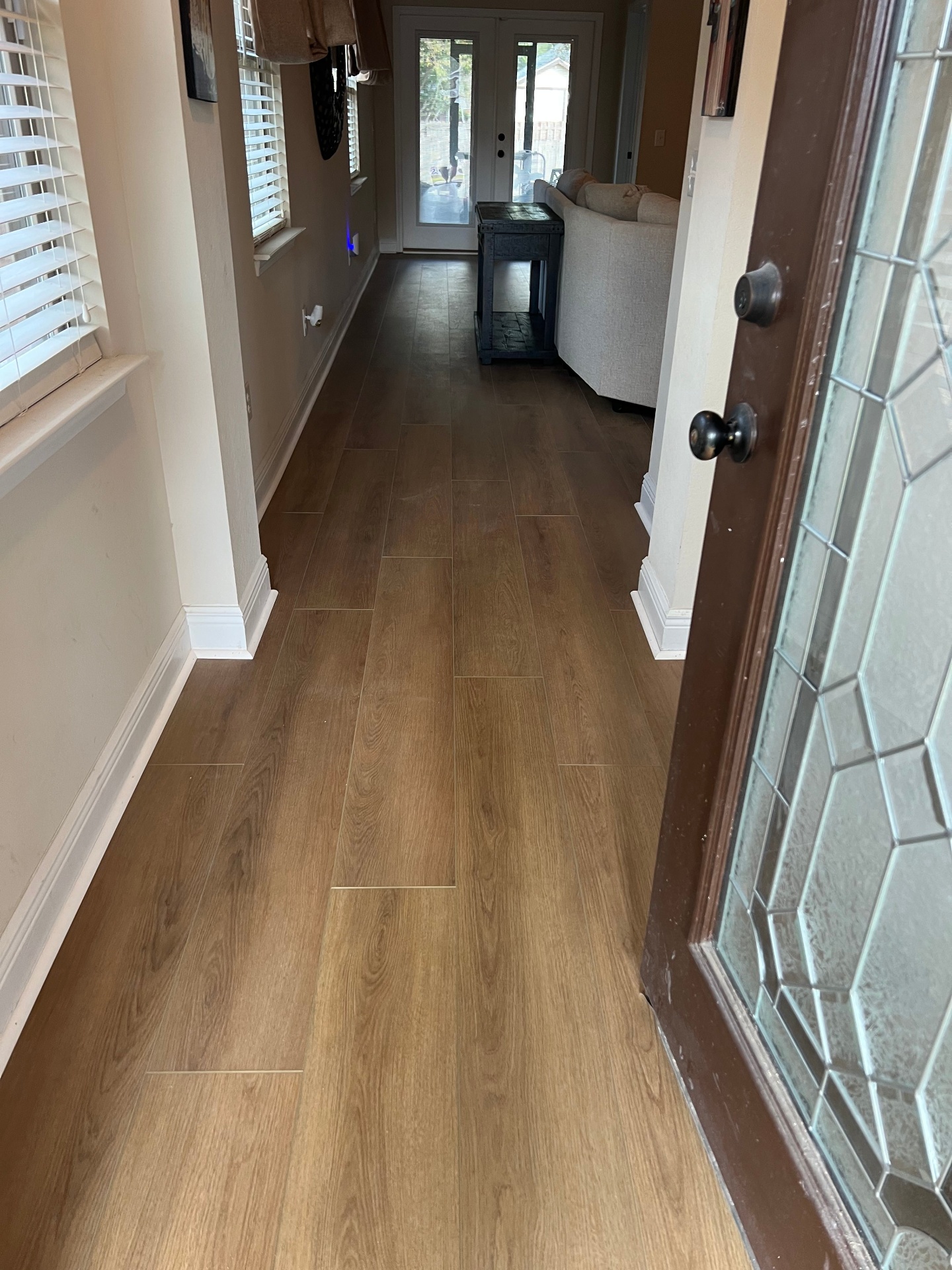

Major Advantages of Vinyl Plank Flooring
Vinyl plank flooring offers compelling benefits that explain its dramatic rise in popularity among homeowners and commercial property owners alike.
Complete Waterproof Performance
The most significant advantage of quality vinyl plank (SPC and WPC types) is 100% waterproof construction. Unlike laminate, hardwood, or bamboo, vinyl plank won't swell, warp, or be damaged by water exposure. This makes it suitable for every room including:
- Bathrooms and powder rooms
- Kitchens with potential for spills and splashes
- Basements (even those with occasional moisture)
- Laundry rooms near washing machines
- Entryways with wet shoes and umbrellas
Exceptional Durability
Modern LVP resists scratches, dents, and stains far better than many alternatives. The wear layer protects against everyday damage from foot traffic, pets, and normal household activities. Quality products with 20+ mil wear layers handle high-traffic areas without showing significant wear for 15-25 years.
Excellent Value Proposition
Vinyl plank delivers high-end appearance at mid-range prices. Compared to hardwood ($8-15/sq ft installed), quality LVP ($4-8/sq ft installed) provides similar visual impact at significantly lower cost. When you factor in durability and low maintenance requirements, the long-term value becomes even more compelling.
DIY-Friendly Installation
Click-lock floating installation systems make vinyl plank accessible to DIY installers. No adhesives, no nails, no specialized tools—just snap planks together over a clean, level subfloor. Most homeowners can complete a room in a weekend, saving substantial labor costs.
Additional Benefits Worth Considering
Comfort and Acoustics
Vinyl plank feels softer and warmer underfoot than tile or natural stone. WPC (wood plastic composite) products offer even more cushioning due to their foam core layers. Standing on vinyl plank for extended periods causes less leg fatigue than hard tile surfaces. Many products also absorb sound better than hardwood, reducing footstep noise and echo.
Low Maintenance Requirements
Vinyl plank needs minimal care to look great:
- Regular sweeping or vacuuming removes debris
- Damp mopping with water handles most cleaning
- No refinishing, waxing, or special treatments required
- Stains wipe clean without penetrating the surface
- Pet accidents clean up easily with no lasting effects
Realistic Aesthetics
Modern vinyl plank technology produces remarkably realistic wood (and stone) appearances. High-definition printing, textured surfaces that match the visual grain, and varied plank patterns create floors that many visitors can't distinguish from real hardwood at normal viewing distances.
Versatile Style Options
Vinyl plank comes in hundreds of colors, wood species imitations, plank widths, and surface textures. Whether you want rustic barnwood character, sleek modern gray tones, or classic oak warmth, there's a vinyl plank option available. Some manufacturers even offer stone and tile looks in plank format.
Significant Disadvantages to Consider
Despite its many benefits, vinyl plank flooring has legitimate drawbacks that may be deal-breakers for some homeowners.
Not Real Wood
For homeowners who value natural materials, vinyl plank will never be "real" flooring. No matter how realistic it looks, it's a synthetic product made primarily from PVC. The tactile feel differs from genuine wood, and close inspection reveals the photographic nature of the image layer. If authenticity matters to you, this limitation can't be overcome.
Cannot Be Refinished
Unlike hardwood (which can be sanded and refinished multiple times), vinyl plank is a one-life product. Once the wear layer is damaged or worn through, the flooring must be replaced. Deep scratches, cuts, or significant wear can't be repaired. This limits long-term flexibility compared to floors that can be refreshed.
Lower Resale Value Impact
While quality vinyl plank is widely accepted, it generally doesn't add the same home value as genuine hardwood. Some buyers prefer—and will pay premium prices for—real wood floors. In high-end markets, vinyl plank may be viewed as a compromise that could affect resale pricing.
Environmental Concerns
Vinyl flooring is a petroleum-based plastic product with associated environmental considerations:
- Production involves fossil fuel extraction
- PVC manufacturing has environmental impacts
- Recycling options are limited in most areas
- Not biodegradable at end of life
Some manufacturers are addressing these concerns through recycled content and take-back programs, but vinyl remains less sustainable than natural options like cork or reclaimed wood.
Other Limitations and Drawbacks
Susceptibility to Fading
Vinyl plank can fade or discolor when exposed to prolonged direct sunlight. Rooms with large south-facing windows or sliding glass doors may show bleaching over time. Window treatments, UV-protective window film, or rotating area rugs can help mitigate this issue, but it remains a consideration for sun-filled spaces.
Initial Off-Gassing
New vinyl plank flooring may emit VOCs (volatile organic compounds) initially, creating a "new floor smell." While quality products with FloorScore or GREENGUARD certification have minimal emissions, sensitive individuals may notice odors during the first few days or weeks. Ventilating well during and after installation minimizes exposure.
Temperature Sensitivity
Vinyl plank expands and contracts with temperature changes more than some alternatives. In spaces with extreme temperature fluctuations (unheated rooms, sunrooms, areas near exterior doors), this movement can cause gapping or buckling if not properly accounted for with expansion gaps.
Dent Potential
While vinyl plank resists scratches well, it can dent or indent under heavy point loads. Furniture legs, heavy appliances, and dropped objects may leave permanent marks. Using furniture pads and taking care when moving heavy items protects against this damage.
Quality Variation
The vinyl plank market includes products ranging from excellent to poor quality. Budget options with thin wear layers, flexible construction, and cheap image printing won't deliver the durability and appearance of premium products. Buyer education is essential to avoid disappointing purchases.
When Vinyl Plank Is the Best Choice
Given the pros and cons, vinyl plank flooring is ideal in these situations:
Moisture-Prone Areas
Bathrooms, kitchens, basements, and laundry rooms benefit most from vinyl's waterproof properties. No other wood-look flooring handles these environments as well without risking moisture damage.
Homes with Pets
Pet owners appreciate vinyl plank's scratch resistance, stain resistance, and easy cleanup. Pet accidents won't cause lasting damage, and claws don't gouge the surface like they would softwood hardwood.
Families with Children
The combination of durability, easy cleaning, and comfortable walking surface makes vinyl plank practical for active households. Spills, art projects, and general kid chaos are easily managed.
Budget-Conscious Projects
When hardwood isn't financially feasible but you want attractive wood-look floors, quality vinyl plank delivers excellent value without the compromised durability of cheap laminate.
Rental Properties
Landlords appreciate vinyl plank's durability, waterproof nature, and easy maintenance. It handles tenant turnover well and resists the damage that can occur in rental situations.
DIY Installers
The straightforward click-lock installation makes vinyl plank accessible to homeowners who want to save on labor costs without sacrificing quality results.
When to Consider Alternatives
Vinyl plank may not be the best choice in these circumstances:
Premium Home Value Priority
If maximizing home resale value is paramount and your market values real hardwood, genuine wood floors may be worth the premium investment.
Natural Material Preference
If authenticity and natural materials align with your values, consider hardwood, bamboo, cork, or natural stone instead of synthetic vinyl.
Extreme Temperature Environments
Spaces without climate control (unheated garages, sunrooms, three-season porches) may challenge vinyl plank's stability. Tile or concrete may be more appropriate.
Heirloom Quality Goals
If you want flooring that lasts generations and can be refinished multiple times, solid hardwood provides that potential while vinyl plank cannot.
Still deciding? Compare vinyl vs laminate or read Should I Get Vinyl Plank? for more guidance. Explore our luxury vinyl collection or schedule a consultation with our flooring experts.